Some songs simply don't seem to fit into their decade. They seem like they were kind of always there, and even hearing them on Jack FM every so often offers little indication of their date of origin. As an adolescent, I could have sworn that Violent Femmes' "Blister in the Sun" was released around 1994 (about the same time I first heard it on the pilot episode of "My So-Called Life") instead of 1981. I also recall my sister playing me "The Joker" sometime in 1996 and thinking that this Miller fella had a bright future ahead of him.
Along those same lines, these lyrics have haunted me for years: "When I kiss your mouth, don't wanna waste it/Turn you upside down, I wanna taste it." But they never haunted me in any sort of conscious state when I could have easily Lycos'd the lyrics (yeah, I still use Lycos, what of it?). Instead, they crept up on me in the dead of night, eating away at my consciousness, daring me to figure out where the hell they came from. One thing I knew for certain, it was not Sheryl Crow, and it was not Jill Sobule.
It wasn't until about a month ago when my bass playing roommate began trying to learn the bass part to "Mouth" that I heard Merril Bainbridge come over his shitty HP speakers. That plinking piano, the upright bassline, the vocal percussion, the timeless production--it all came together at that moment, causing me to jump out of my well-worn computer chair and shout, "Eureeka!" (or rather, just poke my head out my door and say, "hey, who sings that?"--I didn't actually jump out of my chair, I was/am tired/lazy.)
The Basics: Merril Bainbridge, a native of Melbourne, Australia became a superstar in her native country with the release of the hit single "Mouth." The song became a number one hit and the album, The Garden, went double-platinum (that means it sold about 140,000 units in the land of Yahoo Serious). Bainbridge began her career as a session vocalist, trading her talents for studio time with a producer known only as "Siew," who would go on to produce The Garden. Siew helped Bainbridge sign a deal with the Australian label Gotham, and the pair spent over a year recording her 1994 debut. Due to the enormous success of "Mouth," Bainbridge was signed to Universal, and The Garden was released stateside in the fall of 1996.
First Single: "Mouth" was the key to The Garden's initial success in the country that brought us Veggemite. Released around Christmas 1994, the album was lost in the flurry of holiday releases. Later in 1995, the single was repackaged and reissued with more promotional support. The song was soon picked up by radio stations across Oz and after six-weeks, jumped from number 42 to number one, where it stayed for another six straight weeks. After spending 21 weeks on the charts, Bainbridge broke the record for having the longest running number one hit of any female in the '90s. The 4th bestselling single of 1995, the Australian Recording Industry Association accredited the song platinum.
Nearly two years after the initial release of "Mouth," the song hit the U.S. and took a similar path. Debuting at number sixty-seven on the Billboard Hot 100 and soon peaked at number four, spending a total of thirty weeks on the charts. The song sold 600k copies and was certified gold. The rare stateside success of an artist from the country that Ray Winstone once insisted he would civilize made Bainbridge an even bigger star in her homeland. Surprisingly, the song tanked in the UK and was a top five hit in Japan, Hong Kong and the Philippines.
Though the song featured lyrics that many, many dirty twelve-year-olds (cough, me) construed as graphically sexual, Bainbridge always insisted in interviews that the song was, "definitely not a sexual song. It's just honest - about a relationship, how you feel in a relationship. Sometimes you feel you're in control and the next thing, you're insecure - it's the role playing thing."
So it's not sexual, but it's about role playing? We may want to take that back to the drawing board, Ms. Bainbridge.
Second Single: "Under the Water" followed "Mouth"--an almost impossible task for any song. At the risk of sounding hyperbolic, "Mouth" is a one in a million hit--an infectious track that you want to hear over and over again and somehow don't tire of. Think how you felt listening to "Hey Ya!" or "Since You've Been Gone" in the '00s. Maybe you eventually got tired of those songs, but only after putting your iPod on repeat approximately 387 times in a row. Songs like that come around once every couple of years in the pop music world, and since Bainbridge was far from an established talent stateside (unlike, say, Outkast) anything she did after "Mouth" was going to be a let down. Though more a product of its time than the timeless "Mouth," "Under the Water" is still a good song, though not terribly different than the hundred or so Lilith Fair-esque singles around at the same time.
A video featuring Bainbridge with her super haircut (bangs, bangs and more bangs!) alternating between dry and slicked with water was released.
Though the song was big enough to give her another platinum certification in Eric Bana's Home Country--where it peaked at number four--in the U.S., the song stalled at number 91 after six-weeks on the charts. "Mouth" remains Bainbridge's highest charting single.
Whatever happened to...?: Bainbridge is one of the few one-hit wonders who, after a 1998 sophomore album, has come very close to dropping off the face of the earth. In light of how other one-hit wonders have ended up, one has to respect her for not showing up on reality TV and making an ass of herself.
The follow-up album, Between the Days was in the same vein as Garden--well-produced (again by the mysterious Siew, who I picture looking like "Cloak" from the Cloak and Dagger comic book series--come to think of it, Bainbridge looks kinda like Dagger!), light pop with Bainbridge's effortless vocals leading the way. Essentially, more clever songs and tight melodies. But it wasn't enough--even for those in the Terra Australis. The first single, "Lonely" peaked at number 40 on the Australian charts and number 18 on Billboard's "Bubbling Under Hot 100" charts (a list consisting of 25 songs threatening to make it onto the Hot 100).
Cloak & Dagger = Siew & Merril?
The same year, Bainbridge released a cover of Sonny & Cher's "I Got You, Babe" with an appearance by Shaggy. The track, recorded for the Australian film Welcome to Woop-Woop starring international superstar Jonathan Schaech, must be heard to be believed (to her credit, Bainbridge never looked cuter).
The cover peaked at number sixty-two in Australia.
Since then, Bainbridge has released several one-off singles, and recorded an as-yet-unreleased untitled album in 2003. Her last single, "Girl Next Door" faired so poorly on the Austrlian charts that the album was shelved.
As to what she's up to now, an unsourced Wikipedia update suggests she is "working backstage as a composer for other Australian pop artists." I have no idea how one works "backstage" as a composer, though if I had to translate, I'd assume this means she's doing songwriting for other artists, though there's little evidence available on the net to support this assertion.
Editor's Note: First, let me lay down some ground rules. When I say "best," I don't mean these are my favorite songs or even that they're of the highest quality (though at times both of those things may be true, the opposite is probably true). Rather, these songs represent the "one-hit wonder" concept better than any other released that year. In other words, these songs came out of nowhere, became massive hits and the artists faded into obscurity. In most cases, these songs are still with us, having taken on a life of their own, with the artist in some cases entirely forgotten. We will discuss the song, the song's legacy and where the band is now. Also included at the bottom are links to some of the "runner up" one-hit wonders.
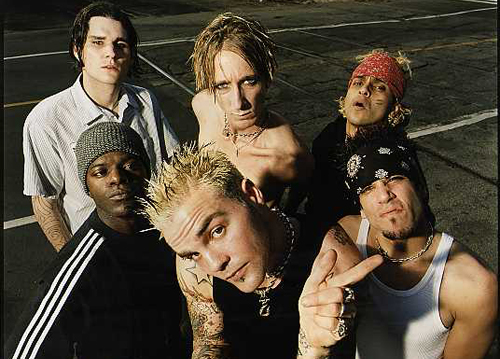
Crazy Town - "Butterfly" (Columbia Records, February 2001; from the album The Gift of Game, 1999)
What can I possibly say about LA-based rap-rockers Crazy Town that hasn't already said by anyone who has ever laid eyes on the band members (and has a decent sense of humor)? What can I say about their hit "Butterfly" that hasn't been run into the ground by the likes of Hal Sparks or Mo Rocca on VH1's umpteenth talking head list program? The answer is probably nothing, but that's never stopped me before.
According to Wikipedia, Crazy Town (who are listed in the genres of "Rapcore," "nu metal" and alternative rock, hip-hop and metal) formed in 1995 after "Epic" (Christian name Bret Mazur) and "Shifty Shellshock" (Seth Binzer) began collaborating on music, but the band did not become "serious"(clearly the Wiki writers got a little loose with the adjectives) about making a go for the big time until several years later. By the late '90s, the duo had recruited a bunch of other dudes who had gelled hair and a truly unnecessary amount of tribal tattoos, christened them with ridiculous, nonsensical names like "SQRL" and "Faydoedeelay", and finagled a record contract out of Columbia Records bosses. By Thanksgiving 1999, the group's album, The Gift of Game, was on the shelves of every Sam Goody and Camelot in every galleria in the country. Unfortunately for Shifty and the gang, the album was nothing special. Another faceless attempt at rap-metal, cashing in on the success of superior (but still shitty) bands like Limp Bizkit and Korn and ignoring anything that might make either of those bands special. The band got a spot on the 2000 Ozzfest tour which allowed Mr. Shellshock to express himself artistically by cracking open a case of Natty Light, greasing himself up, showing off his pecs and Chinese letter tattoos to hoardes of flabby white men in black t-shirts, and pretending to be a rock star. However, this pretending got him into some hot water with the powers that be (most likely Sharon "I'm a horrible person" Osbourne). Shellshock was thrown off the tour two weeks in after doing what he no doubt assumed was simply his rockstar duty--throwing furniture through a glass window.*
Now, I have to side with Señor Shellshock on this one (this is a rant, so skip to the next full paragraph if you don't want to take the scenic route). If you're in a metal band, and you're on a tour named for a man who once tried to impress Nikki Sixx by snorting a line of ants up his nose, and your band is called Crazy Town, it seems like a logical conclusion to assume that, people want you to drink like an asshole and then act like a chemically unbalanced rockstar, even if you're just a chemically unbalanced dude. It worked for Axl Rose, right? It worked for Keith fucking Moon and at least three members of Led Zeppelin, right? Ben Franklin did it. That's historical permission to get wasted and be a prick. Okay, so you could maybe argue that Percy Shellyshock should have waited until his band was headlining Ozzfest, or at least their own tour, before putting a chaise lounge through the French doors, but these are merely details--details a student rockstar cannot be bothered with when all that stands between him and complete rockstar freedom is a couple of inches of glass. So the guy isn't quite Axl--do you think Axl became Axl overnight? No! It took practice; years of pro-bono work smacking around normal girls and freaking out at concerts in dive bars before graduating to supermodels and stadiums. Throwing a chair out a window is Rock Star 101. No one was injured. This isn't Advanced Rockstar Fuckery where you smack photogs, get the cops called on you by your supermodel girlfriend, and incite riots in Canadian provinces. So screw you, Sharon Osbourne, or whoever kicked them off the tour--take a look at yourselves! People in glass houses shouldn't throw stones--they should throw chairs (or something? bear with me; this made sense in my head). And who knows? Maybe the chair really needed to go out the goddamn window.
MOVING ON. Crazy Town's brand of hip-hop-inspired "nu metal" came during the death rattle of the "rap-rock" genre: Limp Bizkit monkey man guitarist Wes Borland departed his band in order to devote his attention to his Ween-inspired band, Big Dumb Face. The likes of Kid Rock had begun to explore other genres like uninspired country-rock, and while nu metal bands like Korn continued to flourish thanks to a strong fanbase, and Johnny-come-latelys Linkin Park managed inexplicably to find success, the salad days of the genre were mostly over and the mainstream tide had begun to turn away from rap-metal. Fans were growing up and either turning their attention to lesser known metal bands, hip-hop acts, or exploring other burgeoning genres like the neo-garage rock scene spearheaded by The White Stripes and The Strokes.
So how did Crazy Town still manage to hit? Easy. Their song had absolutely nothing to do with nu metal. Sure, the guys looked like nu metal guys in their video, but they were playing what was essentially a dance song, just like a few years earlier when Sugar Ray had looked like hard rock guys (and considered themselves as such), but were playing beach music.
"Butterfly" was unleashed on an unsuspecting public in February 2001, almost two full years after the band had released their album. Clearly, someone at the record company was determined to squeeze a hit out of an album that had been sitting on shelves for 18+ months. Why this happened, we may never know, but this is my theory:
There was a lowly A&R manager at Columbia Records who just couldn't catch a break. Maybe he'd spent all his time pushing indie bands and getting nowhere, and his bosses told him he better have a hit band, or he'd soon be collecting unemployment. Desperate, the manager spent a sleepless night at the office, sifting through hundreds of already released songs on his first generation iPod, looking for a hit. Just when he was ready to give up, "Butterfly" played. At first he took no notice of the song, as it was by a band that had two DOA singles ("Toxic" and "Darkside") and an album that had stalled after selling 100,000 copies. But, as he listened to the song, (which is nothing more than a guy rapping over a 5-second sample of John Frusciante's guitar part on Red Hot Chili Peppers' instrumental "Pretty Little Ditty" from 1989's Mother's Milk) he realized, not unlike the creators of the atomic bomb, that what he was listening to had potential; the type of potential that, if exposed to humans, could harm, maim, and maybe kill millions. The A&R guy knew what he had to do. He immediately destroyed his iPod and all copies of the song he could find and, after a few hours of having "yo' my buttafly/suga, baby" stuck in his head, went home and shot the jukebox in his head (read: he killed himself). But he made one mistake: he wrote down the name of the song and artist on a Post-It note. The next morning, an even lowlier intern was clearing out the now deceased A&R guy's desk and came upon the Post-It note reading: "Crazytown (sic) - Butterfly." Within 48 hours, the intern had devliered the song to top execs, who then released the song to radio stations and Tower Records as a single. A video soon followed. When the song hit #1 on the Billboards in 15 countries and sales of The Gift of Game surpassed 1.5 million, the intern was promoted to A&R executive status and made millions of dollars, spent it all on Patrón, cocaine and a McMansion in the Hollywood Hills, joined the Church of Scientology, banged Willa Ford for two weeks, and lost it all when he put all his money and effort behind Nick Lachey's solo career. He now spends his days wandering around Silverlake, filthy, his eyes crazed, and wearing nothing but a sandwich board sign on his shoulders that reads (side 1) "What hath God wrought?" and (side 2) "Butterfly".
This video is presented without comment, but honestly, flying tattoos? What the hell?
A follow up single, "Revolving Door," enjoyed predictably poor results on the charts, but it didn't matter; the damage had been done.
*This also marked the departure of the band's DJ, DJ AM aka Adam Goldstein, who would later become famous for a) spinning at parties thrown by Kate Hudson and other minor celebs, b) boning both Nicole Richie and Mandy Moore, c) barely surviving a plane crash with Travis from Blink 182, and d) dying of a drug overdose in August 2009, two days after the reformation of Crazy Town (I don't say that to be a jerk, but his death really did make him known to people like my mom). Goldstein actually quit the band twice: once quitting after the first Ozzfest incident, only to return after the success of "Butterfly", and leaving once again before the recording of the second album. Inexplicably, Goldstein was actually the second former member of Crazy Town to die after "Rust Epique" aka Charles Lopez, the original guitarist who had left the band for a solo career while The Gift of Game was still being mixed and died of a heart attack in 2004. I'm not going to say there's some sort of curse on Crazy Town, because that Shifty Shellshock guy is still alive despite the best efforts of Dr. Drew and Andy Dick.
Charts: As previously mentioned, the song went to #1 in 15 countries and hit #1 for two consecutive weeks on two different charts (Hot 100 and Modern Rock).
Legacy: What, you mean besides having made one of the most annoying songs of the decade? Possibly ever? Or the fact that they basically gave anyone who is anti-sampling a beyond perfect example of how mind-numbing, repetitive and just plain uncreative sampling can be? Well, there was that great scene in Jake Kasdan's Orange County where the main character (played by Colin Hanks) realizes that the people at Stanford parties are just as horrible as the people at his school, illustrated by a scene of college girls dancing to, you guessed it, "Butterfly".
Where Are They Now? Besides DJ AM, Shifty Shellshock aka Seth Binzer is the only member that anyone remembers or has seen since 2001. After the band's follow-up album, 2002's Darkhorse, failed to deliver another "Butterfly" (which I realize is sort of like saying, "after the US failed to deliver another Hiroshima"), the band broke up. Also in 2002, Binzer guested on Paul Oakenfold's "Starry Eyed Surprise" single, which basically just sounded like another bad Crazy Town song, though 33% less annoying. In 2004, only a year after the band's break up, Binzer released a solo album (as Shifty Shellshock), Happy Love Sick.
2008 saw Binzer joining the cast of VH1's Celebrity Rehab and later Sober House, a celeb-reality show hosted by Dr. Drew about celebrities supposedly in the final stages of treatment, attempting to kick their habits for good. Binzer is best remembered for a relapse in which he disappeared from the premises and posted bizarre videos to his MySpace that gave his housemates (which included Andy Dick) clues as to his whereabouts. Binzer, who was addicted to crack cocaine and an alcoholic, was so good at being sober (or at least, so entertaining at being not sober), that he appeared on Sober House 2.
In 2007, someone played a sick joke on Crazy Town and told them it might be a good idea to reunite (I suspect Ashton Kutcher, though only Sascha Baron Cohen would have the balls to do something so politically charged and sick). It was announced in 2008 that they would be working on a new album, Crazy Town Is Back. According to Wikipedia, the album has been delayed (translation: Obama stepped in).
In August 2009, Crazy Town regrouped for a one-off show at Les Deux in Hollywood.
Editor's Note: First, let me lay down some ground rules. When I say "best," I don't mean these are my favorite songs or even that they're of the highest quality (though at times both of those things may be true, the opposite is probably true). Rather, these songs represent the "one-hit wonder" concept better than any other released that year. In other words, these songs came out of nowhere, became massive hits and the artists faded into obscurity. In most cases, these songs are still with us, having taken on a life of their own, with the artist in some cases entirely forgotten. We will discuss the song, the song's legacy and where the band is now. Also included at the bottom are links to some of the "runner up" one-hit wonders.
Baha Men - Who Let the Dogs Out? (Edel Records, recorded 1998, released as a US single in 2000)
The Baha Men formed in Nassau, Bahamas in 1977 as a group called High Voltage that played traditional Caribbeean junkanoo music. Somewhere in the mid-to-late '90s the group made a decision to begin playing more mainstream fare, which is when "Who Let the Dogs Out?" came into the picture. Originally conceived as a song for Trinidad and Tobogo's Carnival season in 1998, the Baha Men recorded their cover of the track for the soundtrack to The Rugrats Movie.
The song gained popularity mainly through its ubiquitous presence at sporting events during the late '90s and into 2000. The first use of the Baha Men's version being played at a sporting event was at a Seattle Mariner's game. Originally played as a joke (and how could it not be?) for catcher Joe Oliver, shortstop Alex Rodriguez (maybe you've heard of him) took to the song immediately and requested it as his at-bat music.
For some reason, the New York Mets dispute this version of events and claim that they were the first team to use the song, even going so far as to request that the Baha Men record a version of the song with the word "dogs" traded for "Mets" and changing the lyrics to reflect the 2000 Mets lineup. "Who Let the Mets Out?" was played during the Mets' postseason run and the Baha Men performed the tune live at Shea Stadium during Game 4 of the 2000 World Series against the Yankees. The same year, the tune was used by the Baltimore Ravens in the Super Bowl against the New York Giants.
Charts: In an instance where radio and sales apparently had little or no impact on the popularity of the song, the song only reached #40 on the Billboard Hot 100. Then again, why request a song or buy the CD when you can hear it at nearly every single sporting event you attend?
Legacy: "Who Let the Dogs Out?" won a plethora of awards: including Grammys for Best Dance Recording and the much coveted Nickelodeon Kids Choice Award for Favorite Song and, naturally, Favorite Band (Hmm...I wonder how the kids who voted in 2000 feel about this choice now? Leave your answer in the comments!). The song was so widespread that it wasn't long before a backlash began, and by the time the ball dropped on January 1, 2001, the song had become almost universally reviled, with Rolling Stone magazine ranking it #3 (behind "My Humps" and "Macarena") on their list of "10 Most Annoying Songs." Besides still periodically being played at sporting events, the song is most well-known these days as a punchline, as indicated by 2009's massive hit comedy The Hangover with Zach Galifianakis' creepy (albeit hilarious) nerd character posing the question, "Are you guys ready to let the dogs out?" Also, if you're ever lucky enough to catch Snow Dogs or any other kids movie that at any time in the film or marketing features a dog wearing sunglasses, you'll most likely get that chorus of barks stuck in your head again like its 2000!
At press time there was still no answer to the song's titular question.
Where Are They Now? After 2002's Move It Like This, the band's took two years to release a follow up album. 2004's Holla!, was an unexpected success among the Pitchfork indie rock crowd, with the Baha Men taking their talents to the next level by recording an intricately constructed song-cycle about an impoverished child rising through the ranks of the Caribbean drug trade. The band worked with producer Nigel Godrich and guests included Beck, Frederick "Toots" Hibbert, Lauryn Hill, and members of the Wu-Tang Clan.
OKAY, so none of that actually happened, but it sounds a lot more interesting than the reality of Holla!, which was basically just more of the same from the Baha Men, with the title track being written specifically for the abysmal Garfield movie (and includes references to indicate such). The lyrical content didn't improve much over "Dogs," with lines that urged the audience to shout, free of charge, "Come on everybody holla/You don't have to bring a dollar." Reportedly the band is releasing their next album in 2010.
Here's a fantastic video for "Holla!" set to clips of the 11,000th iteration of Power Rangers, Power Rangers: SPD:
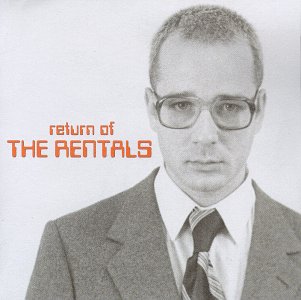
The Basics: In 1995, original Weezer bassist Matt Sharp turned a small, low-budget side-project into a minor hit with "Friends of P"--a new wave-ish tribute to producer Ric Ocasek's supermodel wife Paulina Porizkova. The Return of the Rentals--a collaboration between Sharp and members of that dog. as well as Weezer bassist Pat Wilson--was picked up by Madonna's Maverick Records label and thanks to the success of "P," the band grew a life of its own. Though Sharp returned to Weezer for 1996's Pinkerton , he exited the group not long after (under what initially seemed to be friendly terms, but later--following a lawsuit levied by Sharp on Weezer--seemed vaguely not-so-friendly). He turned to The Rentals full time, releasing a sophomore effort, Seven More Minutes, in 1998. Tell Me More: Born in 1969 in Bangkok, Thailand, Matt Sharp's family soon moved to Arlington, Virginia (assuming dad had some job with the government). Fed up with the classic rock-heavy music scene of his hometown, the punk-influenced Sharp made his way to California at the tender age of 16 and ended up in San Diego. After playing in various metal bands, Sharp met drummer Patrick Wilson. Wilson and Sharp drafted guitarist Jason Cropper to make up the band known as The Wrong Sausage. At the same time, Wilson was in a band called Fuzz with former metal guitarist gone alternative singer/songwriter Rivers Cuomo. Soon, Wilson convinced Cuomo to move into he and Sharp's apartment so they could take advantage of Cuomo's 8-track recorder.
In the summer of 1991, Sharp moved to Berkley, California to work on his own "symphonic keyboard sequencing" music, but by January, he had reconnected with Wilson, Cuomo and Cropper and by Valentine's Day of that year, the band known as "Weezer" was holding their first rehearsal.
After being signed to Geffen Records, the band hooked up with Cars frontman Ric Ocasek, who would produce their eponymous debut (widely nicknamed "The Blue Album"). With the surprise success of that album, Sharp spent the downtime from touring recording his own songs with members of Weezer and that dog.
Though originally intended as a personal project with no plans for release, record companies soon became interested, and the "band" (the lineup was never concrete) signed with Madonna's Maverick Records. The First Single: To start, let's get this "Who is P?" nonsense out of the way. As rumored, the song is indeed about Ocasek's wife Paulina Porizkova. From a 1998 Addicted to Noise interview with Sharp:
"It was one of the first songs I'd ever written at the total infancy of all that stuff. I think at the time it came about because [Porizkova] had mentioned that the only people who would write songs for her were bad heavy-metal bands or something like that. And all her friends were getting these songs written about them and all these other supermodel girls were getting all these songs written about them. So it may have been kind of off-handed like that. That song was written when we were making the first Weezer record, when she was around quite a bit, very pregnant and very large."
Okay, so now that that's through, let's talk about the rest of the song. A fuzzed out pop song using the aesthetics of new wave (notably Moog synthesizers) to create a lighthearted, upbeat composition far removed from the darker and more sinister synth-heavy new wave of the early '80s. While most new wave was concerned with adapting the concerns of 1984 and Brave New World--depersonalization and alienation caused by technology--into musical form, here Sharp uses the same aesthetics to make a fun, power-pop tribute to those soulless robotic songs made popular by bands like Tubeway Army. It'd almost seem like sacrilege to the synth-pop purists if it wasn't so damn catchy. The "big sound on a low budget" aesthetic makes it even more charming--there's all sorts of synths, violins and harmonies going on, but you can't get away from the feeling that this was made on some very dated analog equipment--like Depeche Mode with a 4-track. But the fact that it sounds like it was made for pennies is part of the beauty of it: at times, it sounds like the lost work of a garage band from the early '80s who was more concerned with writing theme songs for their Atari 2600 games than cynical notions of futuristic dystopias.
So as a one-hit wonder, was this just another novelty hit? Most likely. People forget that Weezer started out with not one but two novelty hits--"Buddy Holly" and "Undone - The Sweater Song," before getting some recognition for the heavy emotions of "Say It Ain't So." "Friends of P" offered another hit in line with "Buddy Holly," but even weirder and maybe not quite as friendly--though undoubtedly just as catchy. The song reached #7 on Modern Rock charts and just barely dented the Hot 100 at #92. The accompanying video's aesthetic was keeping in line with the music's--cheap, antiquated, static, weird and funny.
The Second Single: "Waiting" was an odd choice for a follow-up single. Used as a tie-in with MTV Films' first feature, the singing cockroach comedy Joe's Apartment, the song was given the big (and seriously, it looks huge) budget video treatment and made its debut on 120 Minutes (note Afro'd keyboardist and future SNL alum Maya Rudolph):
Personally, I think "My Summer Girl" would have been a more obvious follow-up single. It's not quite as fast as "Waiting," but it's twice as catchy. Regardless, The Rentals were probably destined to be a one-hit wonder. "Friends of P" was hung with the dreaded "novelty" tag early on, and as we've learned from a good 50% of the artists the blog has covered, that's almost as bad as not having anything good to follow it up with. It's almost more infuriating that audiences rejected follow-ups that were just as good if not better, simply because they'd decided the novelty had worn off. It's a shame really, cause, in a just world, most of the songs on Return of the Rentals could have been released as singles. But as any power-pop act from Fountains of Wayne and Matthew Sweet to Cheap Trick and Big Star will tell you: simply having catchy, well-written songs doesn't mean shit in this day and age.
"Waiting" failed to chart and wasn't included in heavy-rotation on MTV. Whatever Happened to...?: In the ensuing years since the release of Return of the Rentals, a myriad of odd things have happened concerning Sharp/The Rentals.
1999: First, Sharp and Weezer parted ways sometime after Pinkerton. Whether he was fired or left is still unclear (Sharp claims he never left or quit). Then, The Rentals made a big, gorgeous, Brit-pop influenced follow-up album called Seven More Minutes, released by Maverick in 1998. The album featured appearances by Blur's Damon Albarn, Ash's Tim Wheeler, Elastica's Donna Matthews, and a song co-written by former Weezer band mate Rivers Cuomo. Despite being completely commercial and pop-oriented, the album tanked. There were a myriad of factors going against the album--the changing tide of rock music, the failure of Weezer's Pinkerton, the fact that SMM sounded a lot different than ROTR. While not an entirely different sound from their debut, the group took it in a whole new direction, no doubt disappointing or confusing fans of the first album who wanted more of the same. I still know people who love ROTR and hate SMM or vice versa. It's quite literally two different bands. Following the failure of the album, Sharp exited the limelight without a word--some assumed for good...
2000: But it wasn't for good. After the success of Weezer's comeback album Weezer (2000) aka the Green Album, people were suddenly interested in Matt Sharp again. The reasons were numerous, but the number one reason was this: Weezer didn't sound like Weezer anymore, and many assumed that was due to Sharp's absense. Despite the fact that Sharp had no songwriting credits on either album, fans posited that he must have had some creative influence over the band that was irretrievably lost upon his exit (more on this later). And with the release of 2002's Maladroit--another disappointment to longtime fans--the theory picked up steam. Sharp quickly became considered something of a martyr by Weezer fandom--a secret genius who had refused to be relegated to the role of sideman by a tyrannical frontman, and Sharp's silence only helped this legend grow. So when Sharp finally broke his silence, people--or at least, hardcore Weezer fans--took notice.
2002: Word began to leak that Sharp had decamped to rural Leiper's Fork, Tennessee (about an hour outside of Nashville) to pursue a solo project. The music was reported to be more stripped down and folky--most songs consisting of Sharp and his acoustic guitar, with maybe some organ here and there. At the same time, Sharp became the subject of controversy when he filed a federal lawsuit against Weezer alleging he was owed royalties for co-writing the hit "Undone (The Sweater Song)" and "owned a 25% interest in the first nine tracks of Pinkerton," all of which were credited solely to Rivers Cuomo. He also charged them with a bunch of other legalese stuff--in the end, they settled out of court. Around the same time Sharp remarked that, despite his lawsuit, his influence was not that large, and the new albums would be just as bad if he were still with the group (noting he hadn't heard the new albums).
Around this time Cuomo himself had taken to chat rooms and message boards to interact with fans. When asked why he never released Weezer's proposed space opera Songs from the Black Hole (written after the Blue album, before Pinkerton), he answered simply "ROTR" (Return of the Rentals). Geeky fans (such as myself) deduced that Sharp may have been influenced by the new wave influenced/moog heavy demos Cuomo had recorded for Black Hole. Listening to the demos available on Cuomo's ALONE collections (as well as B-sides culled from the sessions), there are some sonic and aesthetic similarities, but nothing to implicate Sharp in any sort of creative thievery.
Others have speculated that Sharp was not in fact ripping off Cuomo's ideas, but rather was working in collaboration with him on Black Hole and decided to use the songs for his own project instead. Since Return of the Rentals would be released before the next Weezer album, the incenuation was that Cuomo did not want to be accused of ripping off The Rentals. Parts of Black Hole ("Tired of Sex," for instance) ended up on Pinkerton. All in all, what you really need to know is that Weezer has some of the geekiest fans around (yours truly included).
2004: In 2003, Sharp released a solo EP Puckett's vs. The Country Boy, and a year later released a self-titled full length. Both albums were culled from the sessions in Leiper's Fork. Around this time, Sharp began doing acoustic solo tours and, to everyone's surprise, on February 12, 2004 (two days before the 12th anniversary of Weezer) Cuomo joined Sharp on stage at UCal - Fullerton where they played a couple of joint compositions from back in the day. The performance lead to rumors of a Sharp and Cuomo collaboration which never came to fruition due to what Sharp describes as the duo's "special brand of dysfunction." However, by this time the lawsuit had been settled out of court and there was brief talk of Sharp re-joining Weezer as a third guitar player--however, this did not come to fruition.
2005-present: Instead, Sharp went back to The Rentals, where he has been steadily working for the past four years with a (mostly) all new group of musicians. In 2007, the group released an EP, The Last Little Life and toured during 2006-2007. At the moment, the band is preparing to release Songs About Time, described as "three mini-albums to be released in April, July, and October as digital downloads. At the end of the year, the band will release a limited deluxe edition box set of the project, available both as compact discs and 180-gram vinyl records." Note to Sharp: Sounds complicated. Just give me a new CD, guy.
Based on the new songs on the group's MySpace page, the sound is sort of a combination of Seven More Minutes, Return of the Rentals and a surprising amount of influence from Sharp's solo acoustic work--the sound is far more organic than the fuzzed out futuristic sound of the band's albums. All in all, the new songs are essential for any old-school Weezer or Rentals fan--while I can't say I'm too eager for the next hopelessly ironic new Weezer album, Ratitude, Sharp still seems like a serious artist who's ready to make some cool music.
Our purpose: to uncover the lost second singles of long forgotten one-hit wonders.
I am providing these songs for sampling purposes for a short time, and in order to encourage people to buy music, directly from the artist whenever possible.

 Some songs simply don't seem to fit into their decade. They seem like they were kind of always there, and even hearing them on Jack FM every so often offers little indication of their date of origin. As an adolescent, I could have sworn that Violent Femmes' "Blister in the Sun" was released around 1994 (about the same time I first heard it on the pilot episode of "My So-Called Life") instead of 1981. I also recall my sister playing me "The Joker" sometime in 1996 and thinking that this Miller fella had a bright future ahead of him.
 Cloak & Dagger = Siew & Merril?




 Posts
Posts


