3.23.2009

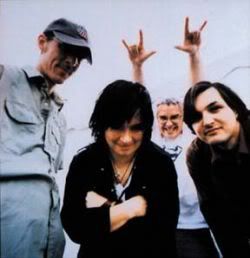
Straight Outta the Buzz Bin #2: Toadies and a rant on post-grunge

In the wake of Nirvana's success, tons of bands deemed "grunge" got signed to major labels. I'm not talking about the indie, alternative bands that majors raided to fill up their rosters in a vain attempt to discover the next Nirvana. No, I'm talking about the bands that were heavily mining Nevermind for how to construct this new sound even before Nirvana's tragic end.

Around the same time, a young, unknown comic progeny named Ben Stiller had a short-lived show on the Fox network entitled, The Ben Stiller Show, featuring Andy Dick, Janeane Garafalo and Bob Odenkirk and written by some dude named Judd Apatow.

Anyways, the show featured skits mostly making fun of movies or TV shows, and a whole lot laughing at the self-seriousness of the Gen-X movement. One of the best was a parody of the '60s live-action cartoon show The Monkees--The Grungies.

Ahead of its time, if you ask me.

Grunge was still cool at the time of Stiller's show and the genre hadn't yet given way to the awful crap that was to come--a type of music that essentially was a parody of the Seattle scene. Indeed, this genre continues to plague us almost 15 years later. You hear it any time you turn your dial to the modern rock station, under the guises of bands with nonsensical names like Hoobastank and Nickleback. It spills out of the car windows of teenagers driving their grandma's car while they sit bobbing their head in the driver's seat wearing their backwards hats and black t-shirts they bought at Sam Goody. That's right, it's POST-GRUNGE!

I will give you a minute to clean up, because you no doubt just shit yourself at the very mention of that name. Now, what is the difference between grunge and post-grunge? Funny you should ask.

Grunge - adopting the sludgy sounds of metal gods Black Sabbath and the lyrical and musical attack of punk godfathers like The Stooges, grunge conveyed elements of heavy metal and punk with loud, distorted guitars, apathetic lyrics, and loud-soft dynamics. Hardcore punk/sludge metal bands like Black Flag and the Melvins--from nearby Montesano, Washington--were often name checked as huge sources of inspiration. However, there was also a notable influence from indie-rock, an influence which grew after heavier grunge bands like Mudhoney, Soundgarden and Green River gave way to more melodically inclined bands like Nirvana, who were as influenced by indie-rockers like R.E.M., the Pixies and Dinosaur Jr as they were hardcore and metal. Pearl Jam, Soundgarden and their hybrid, Temple of the Dog, also show a large classic rock influence--namely that of Led Zeppelin.
Other grunge bands of note:
Mother Love Bone, Screaming Trees, Alice in Chains.

Post-grunge - (with help from allmusic.com) a subgenre of alternative rock and a derivative of grunge music that began after the mainstream success of bands out of Washington like Nirvana, Soundgarden and Pearl Jam around 1994. Post-grunge incorporates many of the features of grunge music: loud-quiet dynamics, distorted guitars, angst-ridden lyrics, lead singers with scratchy, angsty voices or voices that flat out rip-off Kurt Cobain or Eddie Vedder, BUT, the music is generally more slickly produced, radio-friendly and without the idiosyncrasies and nuances of the bands that influenced them. Post-grunge bands generally took the loud guitars, angsty singers, perceived self-seriousness, and of course, the long, greasy hair and flannel shirts, and homogenized it into faceless commercial radio-rock. Also note that post-grunge started off okay, quickly became mediocre and now is the scourge of the music world.
See: Days of the New, Bush, Live, Collective Soul* and later Creed, Hinder, Seether, Staind, etc. As of 2009, post-grunge has gone from being "alternative rock" in the mid-90s to taking over modern rock radio almost entirely.

That's not to suggest that all post-grunge bands were bad and all grunge bands were good. Post-grunge had some great acts like Local H, and grunge had its fair share of crappy acts, one of which I choose not to name for fear of an enormous backlash from their rabid fanbase.

One of the bands who came straight out of the gates following the success of Nevermind--and happened to be actually decent--was the Ft. Worth, Texas band, Toadies. Clearly influenced by the Pixies as much as Nirvana and grunge, the band mixed their post-grunge sounds with a menacing psychedelic influence and an occasional touch of southern blues rock (think a hard-edged ZZ Top).

Started in 1989 by head songwriter/lead vocalist Todd Lewis, the band issued a series of self-released cassette singles before releasing an EP titled Pleather in 1993. The EP--which featured an early version of the soon-to-be-classic "Possum Kingdom"--gained the attention of major record labels and after singing to Interscope, the band released their first full-length, Rubberneck, in 1995.

The first single, "Possum Kingdom" (or as it was listed on Napster back in the day, "Do You Wanna Die?") is one of the best and best-known hard rock singles of the post-Nirvana era. It's one of the few classics to come from this period, and one listen to the song shows why. Something of a grunge epic, the tune features a crushing riff, three distinct (and equally ass kicking) sections, a time signature change, and tells a strange story that--depending on whom you ask--is either about vampires, the Zodiac killer, a girl losing her virginity, a rape, or some kind of ghost story. Taking a cue from Phil Collins, whose "In the Air Tonight' has experienced years of success based on its creepy plot, Lewis never gave a straight answer to the press or fans, but did explain his inspirations. The song is named after Possum Kingdom State Park and Lewis claimed at the time that it was inspired by stories he'd heard concerning the park's "eerie lake" where he and his family used to barbecue. Nevertheless, the group reportedly gained a large vampire following--that is to say, lame Buffy fans in Tampa liked to put in fake teeth and dress like Dracula and come to Toadies shows and sing along. Think of the old SNL skit, "Goth Talk" with Molly Shannon and Chris Kataan and you've got a good idea of this fanbase. Don't get any ideas, Twilight fans.

The supremely creepy music video--which opens with a body bag being pulled from a lake--did nothing to dissuade any creepy interpretations of the song. (Oh yeah, and that is a chick bass player--the ultimate sign of a good alternative rock band. Or at least a sign that you like the Pixies and/or Sonic Youth.)

The song was a smash hit, charting high on the Modern Rock and Mainstream Rock charts and even cracked the Hot 100. Not bad for a song that repeatedly asks the listener if they would like to die.

"Possum Kingdom" was one of five singles off Rubberneck released by the label, which may sound like overkill, considering that means nearly half the album being played on rock radio--not a common occurence unless you're Red Hot Chili Peppers. Despite the airplay, "Mister Love," "Backslider" and "Tyler" all failed to chart, even though the latter even featured its own video. The only one that had any staying power was "Away"--the direct follow-up to "Possum Kingdom."

"Away" starts out like a Nirvana deep cut with its soft-loud-soft dynamics and guitarist Darrell Herbert's snakey lead fills which sound possessed by the Pixies Joey Santiago. But once you get past the obvious influences and realize that the Toadies concern themselves more with crafting great riffs and writing above average lyrics than creating something original, you start to realize just how good the song is. It's not quite as epically awesome as "Possum Kingdom"--though it does feature a similar, truncated structure--but it's got that same underlying creepiness, a bone-crushing riff and a good level of head-bangability. When Nirvana has ended prematurely and the Pixies have folded, and you're still yearning for some heavy, well constructed rock, the Toadies--and "Away" especially--fit the bill.


"Away" went to #23 on the Mainstream Rock chart and #28 on the Modern chart.

I also have to include "Tyler," just because it's a great rock song. Talk about unoriginal--I'm fairly certain this song is on Doolittle by the Pixies. But guess what? I don't care, cause the song is so goddamn hooky and fun. If you're going to steal, do it well, and steal from the best (but maybe don't let Frank Black hear you, he might start asking for royalties). While it wasn't a hit, it became a favorite at Toadies shows and still received tons of airplay.

So now then. With a hit album that went gold immediately and platinum a year later, the Toadies were primed to be a successful band, and not just a one-hit wonder. So what the hell happened?

Like with most of these bands, their label screwed them. After touring for two years with bands like Butthole Surfers and Red Hot Chili Peppers, the band eventually headed back into the studio. After recording a full album titled Feeler, which was being eyed for a 1998 release, the band handed the finished recordings to Interscope--but the label rejected them. After the rejection, the band, worn out from the road and without an album to promote, decided to take a break to write new songs and didn't reconvene until 2000. Salvaging some of the Feeler songs, the band finally went back into the studio with Rubberneck producers Tom Rothrock and Rob Schnapf, and came out with Hell Below/Stars Above. The album was a commercial failure

That's when the real trouble began. The album was released in spring 2001, seven years after their debut and things had changed. Five months after the album's release, Lewis called the Dallas Observer to announce that bassist Lisa Umbarger had quit and that the rest of the band would not be continuing on as the Toadies. The band would reconvene sporadically to play a few dates in the Dallas/Ft. Worth area but did not officially reunite until 2007.

During the interim, Todd Lewis began a new band, Burden Brothers, with Reverend Horton Heat drummer Taz Bentley. The band released a full-length in 2006, but a funny thing happened with the Toadies. The band released a couple of live albums in 2002 and 2006, and sales were enough to suggest to Lewis that maybe the Toadies weren't dead after all. With some old members and new bassist Doni Blair, Lewis brought the Toadies back for a couple of local festival shows in 2006, and a year later, the Toadies hit the road for a small tour around Texas, hitting spots in Houston, Austin and Dallas.

After a couple of years of activity on their MySpace page, in May 2008, the group announced the release of their third album of all new material, No Deliverance. The album was released in August 2008 and received a big promotional push from the Toadies new label, Kirtland Records. The single "Song I Hate" shows the Toadies back to doing what they do best--hard, catchy rock that's derivative as hell, but still damn good.

So for all my blathering about post-grunge (and really, there is some horrendous crap out there), there are a lot of worse things in music than being unoriginal. If you're looking for a solid rock band that will bring to mind the greats of '80s indie rock/grunge, check out Rubberneck or Hell Below/Stars Above next time you're in a a CD store with a cutout bin or used section. And catch these guys on tour this year, their live show will melt your sneakers.

Download: Toadies - Possum Kingdom
Download: Toadies - Away
Download: Toadies - Tyler
Download: Toadies - Possum Kingdom (live)

MySpace page
Official Site
No Deliverance Official Site

Follow us on Twitter

*Collective Soul was really more of a pop-rock band that had been marketed and styled as grunge, but had no real connection to the genre and are unfairly labeled "post-grunge," even by assholes like me

3.21.2009

New Superdrag albums streaming

Hey all,

There was a bigger-than-usual response to the Superdrag post last week, so I thought I'd follow up a bit on the band's new album.

Industry Giants was released Tuesday, March 17, and is currently available in stores. If anyone wants to listen to it before you buy it, it's streaming over at Buzzgrinder.

Also, Superdrag frontman John Davis did some blogging over at the same site early last week. Read his posts here.

Look for a new post early next week.

Don't forget to follow us on Twitter!

3.16.2009

Straight Outta the Buzz Bin, #1: Superdrag - Sucked Out

SPECIAL NOTE: "Straight Outta the Buzz Bin" posts will be reserved for hit rock singles that were huge on Modern Rock radio and especially MTV, but may not have achieved the Top 40 or Top 100 status that might normally be required to make them a one-hit wonder. Future installments may include (but are not limited to) Wax, The Refreshments, and others.

Superdrag have a similar story to many other alternative rock bands in the mid-90s. It's so similar that--sadly--it became something of a cliche: After some initial success as an indie band, band gets noticed by a major label during the post-Nirvana indie boom. They soon sign to a major label, release an album and have one major (or minor) hit on radio and MTV. But when second single/album comes around and fails to hit, band gets its funding cut and/or get dropped. I'd guess a lot of bands got cut from the label rosters when alternative/indie rock gave way to nu-metal and rap/rock in about 1997-1998.

Some bands collapsed from the fallout--unable to continue--but Superdrag managed to persevere.

Superdrag were formed in 1992 in Knoxville, TN when the band The Used (not the emo band) started playing songs demoed by their teenaged former drummer, John Davis (Davis played all the instruments himself on the demos). Because Davis' songs were stronger than their own material, The Used fell to the wayside in favor of Superdrag.

By 1995, the band had released three vinyl singles and an EP, The Fabulous 8-track Sound of Superdrag o the Darla Records label (historical fact for the kiddies: people in the '90s loved absolutely anything having to do with the '70s, much like people enjoy '80s kitsch and fashion in the '00s, hence the 8-track reference).

Thanks to rave reviews in various publications, the EP started a major label bidding war. Elektra Records eventually won out and the band recorded and released Regretfully Yours in 1996. The sound was a perfect combination of Weezer-esque power pop (hard guitars mixed with catchy melodies) and classic rock (a strong emphasis on riffage and solos; Davis' throaty vocals).

"Sucked Out" was the first released single. While not quite a novelty song in the sense that label mates' Nada Surf's "Popular" was, the song's chorus in which Davis screams, "Who sucked out the feeling?" made it into something of a slacker anthem; something the always cynical youth of America could relate to. Problem was, Superdrag weren't grungy slackers. Davis wrote what were essentially pop songs. "Sucked Out" may have struck a chord with the slackers, but it was far different than the grunge clones (Collective Soul, Bush) that had become the sound du jour of alternative rock; there was more far more Husker Du in their songs than the sludgy Seattle sound started by bands like Mudhoney and Soundgarden.

The tightly constructed single is built around a killer chorus where everything drops out but the bass and Davis' scream. And yes, like so many '90s rock hits, the chorus utilizes the Pixies' soft-loud-soft dynamic, but the verses are straight out of a hit single by a '60s British Invasion band. Because labels and sometimes fans seemed to miss the pop influences inherent in Nirvana (the barometer by which all alternative rock bands were gauged), the pop-centric Superdrag would not be long for the Hollywood music world. Incidentally, the song's lyrics seem to be a cynical take on the music industry. When Davis sings, "This is my dream - playing out rocking routine/Who sucked out the feeling?" you wonder if he even wants the success. Still, the track is a knock-out, and clearly hit single material.

"Sucked Out" only reached #17 on the Modern Rock Charts, but its placement in MTV's "Buzz Bin"--a status designated to videos deemed "cutting edge" by the network--helped put the Chris Applebaum-directed video in heavy rotation. The "Buzz Bin" status--along with an extended tour in which the band played hundreds of dates--helped push 300,000 units of the album. With all the play on MTV, radio was practically an afterthought.


Sidenote: Just how '90s is this video? On a scale from 1-10, I give it a high 8. We've got the retro '70s diner/coffeeshop--made chic by Seattle, Starbucks and iconic '90s films like Pulp Fiction, Reservoir Dogs and Swingers--the young slacker working his minimum wage job (shades of Clerks) and dreaming about quitting and fulfilling his lifelong dream of rocking out (Singles, anyone?). While it may seem fairly generic at first glance, you can soon tell why it couldn't have been made in any other decade.

Their second single, "Destination Ursa Major" failed miserably on the charts. Ironically, it's probably the song on the album that best defines the band's sound. Led by a building riff consisting of a series of bent notes that give way to jangly bridges and sing along verses, the song is a marvel of song construction and undeniably catchy, but the song's appeal is far closer to something by lo-fi stadium rockers Guided By Voices than anything that might appeal to the MTV crowd. It's still a hell of a song, and is regarded as one of the band's classics.


Still, thanks to the success of Regretfully Yours, Elektra allowed the group a shot at another album. Silly record labels--when will they learn you never give a second record to a songwriter who is both talented and ambitious? Head Trip in Every Key was the follow-up, an ambitious semi-concept album featuring a broader sonic pallet--besides guitar and piano, Davis plays theremin, organ and a freaking sitar--longer songs and fewer radio-friendly singles. The album was well receieved by critics, but the label was unhappy with Superdrag's direction and cut their funding, leaving them unable to make a video for the single "Do the Vampire" and without any support for a full-fledged tour.

Upset about what was happening with their label, the group decided to release their odds and sods compilation Stereo 360 Sound independently, and experienced a minor success. After signing a two album extension deal with Elektra, the band headed to Woodland Studios in Nashville to begin work on their third album, but were bothered by the label's insistence that they write "hit songs" (yes, this happens in real life, not just That Thing You Do!) and soon demanded the label drop them. This was a most unusual move, especially for a group who had been relegated to "one-hit wonder" status, but, as the kids say, Superdrag didn't give a care, and the group continued on independently, recording and releasing their third album, In the Valley of the Dying Stars in 2000 on Arena Rock Recording Co. Ironically, the album was a combination of the radio-friendly hits of Regretfully Yours and the experimentation of Head Trip.

By the time Superdrag began recording their fourth album, Last Call for Vitriol, John Davis had become an alcoholic, later remarking that he had a "charter membership in the Bon Scott Club," referring to the original AC/DC frontman who drank himself to death in 1980.

However, Davis claims that, while driving in his car one night, he had an experience that he described as "a combination of being struck by lightening, getting hit by a cannonball and having a piano dropped on your head." The feeling was overwhelming, and Davis took it as a sign from God that his life could not be filled with alcohol, but rather by "the power of the Lord." Davis soon gave up alcohol and became a Christian. Davis finished recording the album and completed a tour with Guided By Voices, but soon after decided to leave the band, saying his "heart wasn't in it anymore." The group disbanded in 2003. (read Davis' thoughts about his conversion here)

In 2005, David released a self-titled Christian-oriented album. Playing all of the instruments himself, Davis broadened his palette even more with this release, displaying a range of influences from country and folk to gospel and R&B--not to mention a heaping glob of '60s rock. The heaviest influence is Brian Wilson and Pet Sounds in particular--for instance, "Salvation" does what R.E.M.'s recent Beach Boys tributes could only attempt. (Honestly, if you've ever wanted to know if Christian themed music can be any good, pick this one up. It's great, and doesn't preach or beat you over the head with any message--ed.) In 2007, Davis released a follow up, Arigato! and joined the Christian rock band My Red Hot Nightmare as guitarist, back up vocalist and part-time drummer.

Since then, Davis and the other guys in Superdrag have served as studio musicians in Nashville, Knoxville and L.A. not to mention some production work and a few side projects. But in 2007, the original lineup reuinited for a few shows, followed by a full-fledged tour in 2008. The band even has a new album recorded called Industry Giants that will be released this Tuesday (March 17, 2009). Yet again, the guys are self-releasing and you know they wouldn't have it any other way (read more about it here).


FIRST SINGLE: A
SECOND SINGLE: A


Download: Superdrag - Sucked Out
Download: Superdrag - Destination Ursa Major

BONUS DOWNLOADS!
Download: Superdrag - Do the Vampire
Download: John Davis - Salvation

Go see Superdrag on tour!
Go buy their albums!

Follow The Second Single on Twitter!

2.23.2009

When Indie Goes Top 40, #3: Butthole Surfers - A Brief History

There is perhaps no less likely candidate for mainstream Top 40 success than the San Antonio, TX band Butthole Surfers. The name alone is probably the most profane thing Casey Kasem ever uttered--at least on air, sending up a red flag for parents and family groups all over the country. And that's not even to mention their bizarre brand of offensive psychedelia influenced noise rock and absolutely bonkers and at times even dangerous stage shows. These guys weren't cokeheads or potheads or heroin addicts like most rockstars--these guys were on acid all the time, and it showed in everything they did. Life through the eyes of frontman Gibby Haynes most likely looks something like an ink-splattered Ralph Steadman illustration from the pages of Hunter S. Thompson's Fear and Loathing in Las Vegas.

The Surfers started in a most unusual way. While students at Trinity University in San Antonio in the late '70s, Haynes--captain of the school's basketball team and student of accountancy--and Paul Leary Walthall--an MBA student and son of the dean of the business school--met and bonded over their shared love for avant garde music and general weirdness. After graduating, Haynes got a job at a prestigious accounting firm, but was fired when he was found with a xeroxed photograph of mutilated genitalia meant to be published in his self-published magazine dedicated to ficticious ailments titled Strange V.D. Haynes headed to Southern California and Walthall, with one semester left, dropped out of school to join his friend. The two soon returned to San Antonio to start a band, which would become the Butthole Surfers.

After adding a bassist and drummer, the band played a few shows to little success. Originally the name was not Butthole Surfers--that was merely the name of one of their early songs. Early band names included Dick Clark Five, Nine Foot Worm Makes Own Food, the Vodka Family Winstons and The Inaliable Right to Eat Fred Astaire's Asshole. Butthole Surfers was settled on after the band was asked for a name by a promoter, forgot whatever name they were being called at that time and used that one as a placeholder.

Having failed to gain a following in their hometown, the band moved on once again to Southern California. The early shows were performance art pieces which, according to Paul Leary, included "lots of stuffed dummies and toasters and Big Mac hamburgers." Leary added "music was an excuse. We had to de-learn how to play." The setlist included lots of TV themes (including Perry Mason and The Brady Bunch) done in a thrash-punk style with Haynes singing through toilet paper rolls. Often opening for hardcore punk bands, the show would leave the hardcore fans "too dumbfounded...to boo."

While in California, they were discovered by Dead Kennedys frontman Jello Biafra who was so impressed with the live show, he asked them to do a record for his label, Alternative Tentacles. With the promise of reimbursement from Biafra, the band returned to Texas and obtained a new drummer, Jeffrey Coffey aka King Coffey--who is still with the Surfers to this day. The band recorded their self-titled EP, which would later be listed by Kurt Cobain as one of his top ten albums of all time.

The band soon added a second drummer, Teresa Nervosa--better known as "Madonna Pap Smear Girl" in Richard Linklater's Slacker--to add to the spectacle of their insane stage show. Due to the physical similarities between the drummers, Nervosa and Coffey referred to themselves as siblings, although they were not related (take that, Jack White!). The band returned to a substandard studio in San Antonio and, while living in a tool shed, recorded enough material for two albums. The first released was Psychic...Powerless...Another Man's Sac in 1984. Released on the famous indie label Touch & Go records, the album was a combination of psychedlia, punk, hardcore and country and used various avant garde techniques like tape editing, non-traditional instrumentation and Haynes singing through a bullhorn--techniques that would soon define their sound.

A couple of years later, the band embarked on a national tour and made fans across the country--even some famous ones, like Soundgarden guitarist Kim Thayil and members of Sonic Youth. The band soon found themselves living in Winterville, Georgia, located near Athens--according to the band, the locale was chosen so that they could stalk their favorite band, R.E.M.

Word of mouth about their, um, nontraditional stage shows began to spread and audiences started to grow. At various times, the stage show included Haynes putting condoms filled with red dye in his pants, which would eventually burst and look like a painful genital wound, Haynes stripping down and performing completely nude, two drummers playing in unison, various pyrotechnics and fireworks, strobe lights, 16-mm film footage of gross medical procedures were projected alongside clips from Charlie's Angels, and a nude stripper named "Ta Da! The Shit Girl" who would, on command, spray projectile diarrhea on the stage--I wish I were making this stuff up. Teresa Nervosa later commented "The full-on shows would make people puke and scream and run out, that kind of thing. It was what we'd always wanted."

Around this time the band began living together in a ranch in Driftwood, TX 30 miles outside Austin, where they shared money, food, clothes--anything that could actually be shared. Lots of experimental audio and video recording went on at the time. This video may or may not have been recorded at this time:

Note: for more on the Butthole Surfers truly insane exploits, read
Michael Azerrad's
Our Band Could Be Your Life

By this time, the band was on their their third full-length album, 1987's Locust Abortion
Technician--often considered their finest album, containing classics like "Human Cannonball" and a rewrite of Black Sabbath's "Sweet Leaf"--"Sweat Loaf." Recorded in their home, the album was made using only one microphone and an 8-track recorder. This album also featured the culmination of Haynes' vocal experiments--an effects setup dubbed "Gibbytronix." The album was also the last for drummer Teresa Nervosa.

In 1988, the Surfers released a bizarre Texas Chainsaw Massacre-parody video directed by and featuring Alex Winters (Bill from Bill & Ted's Excellent Adventure) titled Bar-B-Q Movie. This may give you some indication of what these guys were like back then. The end actually includes a staged recreation of the band's live show, performing "Fast (aka Fart Song)" and features actor John Hawkes (Deadwood, Eastbound & Down, Me, You & Everyone We Know)
NSFW!:


After the release of their fourth and to date most accessible album, Hairway to Steven (a play on Led Zeppelin's "Stairway to Heaven"). After releasing a live record, Double Live, and an EP Widowermaker for Touch and Go, the Rough Trade label showed interest and signed the band to a reportedly generous one-album deal which birthed 1991's pioughed. Though the album was something of a bust commercially and from the perspective of the band, it enabled them to join the Lollapolooza tour.

The same year, Rough Trade filed for bankruptcy and--in a move that could be deemed more shocking than having a woman defecate on stage--signed to a major label, Capitol Records. In another shocking move, Led Zeppelin bassist John Paul Jones agreed to join the band in the studio for their major label debut, Independent Worm Saloon. The band experienced their first real mainstream success when the single "Who Was In My Room Last Night?" which reached #24 on the Mainstream Rock charts. The album itself even managed to crack the Billboard 200. That's right, the Butthole Surfers--a band that featured a frontman who once had sex on stage with a nude girl covered in gold paint--were now considered mainstream and being shown on MTV.


Capitol also began to spread the group's music to TV shows and soundtracks, putting their trippy 1991 Donovan cover "Hurdy Gurdy Man" on the Dumb & Dumber soundtrack.

Harkening back to their old days as TV theme cover artists, the band released a cover of the Underdog theme song for the Saturday Morning: Cartoons' Greatest Hits compilation. (No, I don't know what Drew Barrymore is doing here)

As if their mainstream success wasn't strange enough, Haynes began a sideproject with Johnny Depp and Flea of the Red Hot Chili Peppers and began playing with them around Hollywood as P. P is now best remembered as the band playing at Depp's club The Viper Room the night actor River Phoenix overdosed on a speedball.

P, featuring Haynes (center) and Johnny Depp (right)

At the time, Haynes was also strung out on hard drugs like crack and heroin and the band was losing members who had grown tired of Haynes' behavior. He soon checked himself into rehab where he roomed with Kurt Cobain who would kill himself days after checking himself out of the facility. The band credits the reunion of the band to record a new album, not rehab, with Haynes' finally getting clean.

The band headed to Bearsville Studio in New York with producer Steve Thompson, who had a background in heavy metal and dance--a perfect combination for the sound they wanted. The band spent several months crafting the LP and eventually Thomspon left, leaving Paul Leary to produce the remaining tracks. The band used another parody of a classic album to title their
record, Electriclarryland (a reference to Jimi Hendrix's Electric Ladyland). It was their second choice after realizing the title Oklahoma! could present legal problems. No, seriously.

The record label immediately recognized the album was going to be a hit and sent out the first single "Pepper" to rock radio. Laced with a hip-hop beat and rapped vocals as well as a prominent sitar, "Pepper" was essentially the Surfers doing their version of Beck's "Loser," but doing it better than Beck ever did. A gloriously silly, catchy and stupid song, call "Pepper" parody or a Ween-like tribute to Beck's style, but the similarities are anything but coincidental.

In some stores and on radio stations that refused to say the name, the band's name was shortened to "B-Hole Surfers" or sometimes just "Surfers." "Pepper" went all the way to #1 on the Modern Rock Charts, #19 on the Mainstream charts and did indeed crack the Top 40 charts at #38. (
NOTE: If anyone has a clip of Casey Kasem saying "Butthole Surfers" or even just "B-Hole Surfers" PLEASE let me know.) Electriclarryland reached #31 on the Billboard album charts and was certified gold.

The second single, "Jingle of a Dog's Collar" was a tribute to the Surfers' myriad of influences, with an R.E.M. guitar line turning into a more surf-rock guitar part, with Haynes singing in a talk-singing style that would make Lou Reed proud. The song is fine, but it's not close to being the best song on the album (nor is "Pepper") and it's unsurprising that it failed to crack any of the charts. Songs like "The Lord is a Monkey" or "Birds" are more indicative of the album's style, humor and quality and show the band at their tightest and best (not that they would have been hits either). The album is consciously all about being stupid and making dumb rock n' roll, and "Jingle" just isn't dumb enough.

At the time, the band began losing good will with the indie and punk community (most notably Minor Threat and Fugazi frontman Ian MacKaye) by initating a lawsuit over royalties with Touch and Go Records. The band argued that the label head was not honorable in his financial dealings. They eventually won the lawsuit and were able to release their first four albums on their own label, Latino Buggerveil.

In 1998, the band recorded another album, After the Astronaut, that was put into limbo when the band had a falling out with their manager and had difficulties dealing with Capitol. However, by 2000, the issues were resolved and the band rerecorded most of the tracks as Weird Revolution with Green Day producer Rob Cavallo. The album was a modest hit, reaching #124 on the album charts. Never afraid of being stupid the single, "The Shame of Life," was co-written by Kid Rock, peaked at #24 on the Modern Rock Charts. As to why Haynes chose Kid Rock as a writing partner:
According to Haynes, Kid Rock wanted to use a sample from the Surfers' Black Sabbath parody "Sweat Loaf." "We were like, 'Oh, Kid Rock, ka-ching, sure,'" Haynes says. As a swap, he asked Kid Rock for help with the chorus of their planned single. "He came to my house in his big white limousine with his five-hundred-pound bodyguards. He says, 'Let's just write a new song,' and I'm like, 'Uh, okay.'"

In record time Kid Rock is singing "I love the girls and the money and the shame of life." "We were all kind of like, 'Yeah, way to go, Kid,'" recalls Coffey. "I mean, you can't really slag him for writing it there on the spot. And how do you tell a guy who's doing this out of charity that it's so, so, what's the word . . . bad?"

Haynes was genuinely charmed yet admits, "It took me a long time to do the verses because it's hard to embrace a song that says 'I love the girls and the money and the shame of life.' It's tough."

From the underground to MTV and Ta Da! The Shit Girl to Kid Rock, the Surfers had been around for 20 years at the release of Weird Revolution. Since then, Haynes released a 2004 solo album under the name Gibby Haynes and His Problem, and in summer 2008, the band reuinited with Teresa Nervosa and long-time bassist Jeff Punkus for a European tour. Haynes has mentioned in interviews that a new album is "likely" but no release date has been named.

While the Surfers' music can't really be duplicated, many bands have tried to out-hardcore the Butthole Surfers' live shows, but few have actually done it. Jackass is probably closer to the Surfers' show than any current band. Still, the multi-media carnival aspect of their live shows continues to influence bands, most notably long-time acid rockers, The Flaming Lips. Haynes actually comments in the Lips documentary The Fearless Freaks that the band straight-up copied the Surfers' live show.

The Top 40 charts will see bands come and go, but never will there be a band as bizarre, obscene or unlikely to be there as San Antonio's Butthole Surfers. I love this band.

FIRST SINGLE: A
SECOND SINGLE: B-

Download: Butthole Surfers - Pepper
Download: Butthole Surfers - Jingle of a Dog's Collar
BONUS Download: Butthole Surfers - The Shame of Life (co-written by Kid Rock)

Buy stuff, download official bootlegs and more