Showing posts with label Tom Cochrane. Show all posts

10.21.2008

Shawn Mullins "Shimmer"

"Shawn Mullins."

In a completely unscientific survey I conducted, I found that for some reason people remember this guy's name and his one-hit, "Lullaby" (they usually follow this with a long yawn). This is a bit unusual as most one-hit wonder artists are faceless, unmemorable folks and sometimes they're even confused with other artists (see the Tom Cochrane entry). And even though Shawn Mullins looks pretty much like any hippie in a Phish t-shirt working at the seafood counter at your local grocery co-op, he gets remembered. Was his song, "Lullaby" that great? Was it that memorable? Or was it just that a lot of people impulse-bought this guy's album and still remember wishing they'd spent that $12.99 on a case of Schaefer Light?

Mullins was your average, run-of-the-mill songwriter. Well, we'll say slightly above average. He's better than a lot of the dudes you'll see at coffee shop open mike. His songs are enjoyable, and a bit more memorable than this kind of thing usually is. It's nothing that wasn't covered at some point in the '70s--that's not necessarily a bad thing, and one can't be too pissed off when a legitimate songwriter comes out of nowhere to find a place on the Top 40. Mullins was clearly indebted to the likes of James Taylor and Kris Kristofferson, even including a cover of Kristofferson's classic "Sunday Morning Coming Down" on one of his albums.

Mullins' first release was a cassette he self-issued in 1989, when he was in the US Army Airborne Infantry Division. In 1991, after having reached the rank of 1st lieutenant, Mullins left the military to pursue music on a full-time basis. Having spent three years searching for a record deal without any luck, he established his own label which released the albums Better Days and Big Blue Sky in 1992 and 1994, respectively. He returned in 1996 with Eggshells, the album which secured him a deal with Columbia Records.

Released in 1998, Soul's Core was layered with a contemporary, trendy (some might say over) production that belied the rootsy, throwback qualities of his work. The album hit #54, and went platinum buoyed by the monster hit that "Lullaby" became.

"Lullaby" is a typical Mullins track, telling the story of a girl who has become depressed about her existence, wishing for a life away from her movie-star filled Hollywood upbringing and harsh LA nights. The narrator--whose concern seems more paternal than romantic--wishes to save her, singing to her "everything's gonna be alright." (A quick aside: as a native Nashvillian, I wish to respond to Mr. Mullins' assumption contained in the song that Nashvillians don't have tans--Kenny Chesney is living proof that this statement is false. Please don't take this to mean that Nashvillians are also bald, short and of ambiguous sexuality.)
The song was unusual in that the verses weren't sung as much as they were spoken. While many hit songs have included spoken sections, few have included this much "talk-singing" (as a friend of mine calls it) outside of maybe Lou Reed's "Walk on the Wild Side" (incidentally Reed's one mainstream hit). Mullins voice is soothing enough to pull-it-off, sounding like a guy at a bar telling you a story after he's six drinks and a couple of joints into a night of excess. It's also nearly six-minutes, breaking the cardinal rule that a hit song has to be under four minutes. As alluded to earlier, the production is a bit over-the-top...the acoustic guitar base is layered with a hip-hop-style beat, brightly rambling pianos, rock drums and by-the-numbers guitar solos.

Like the biggest and best one-hit wonders (e.g. "Walking in Memphis"), "Lullaby" transcended charts and genres, becoming a crossover hit: peaking at on the #9 Modern Rock Tracks, #7 on the Hot 100, #1 on the Adult Top 40 and #1 on Top 40. It didn't hurt that the song had a video starring Girl of the Hour (and what a short hour it was), late-'90s hottie Dominique Swain.


The follow up single, "Shimmer," was a big-budget remake of a song that had been included on Eggshells. The production is similar, the guitar riff and drum beat are similar, the song structure is similar, the story is similar...Jesus, it's practically the same damn song.

That's not to say it's bad, in fact, it might be better than "Lullaby," but the radio-ready, kitchen sink production makes the two songs almost indistinguishable. It's even a minute and a half shorter than the hit single. All of this could lead one to the conclusion that it was engineered in a lab to be the perfect follow up to "Lullaby," even getting a boost by appearing on Dawson's Creek (desperately trying not to make any Katie Holmes references.) Except it peaked at #27 on the Top 40 chart--not a bad showing for a second single, but not enough to keep the public interested for the long-term either. So why didn't it hit bigger? My theory is that people were simply sick of "Lullaby." If the charts don't prove it to you, then ask anyone who was around in '98 and '99--that song was ubiquitous. And "Shimmer," regardless of quality, is really just more of the same. Add to that, anyone who still liked "Lullaby" could just listen to "Lullaby." And after that, people probably thought "Lullaby" and "Lullaby Pt. II, III & IV" were all Mullins was capable was. Take note, budding musical artists, this is an easy way to become a one-hit wonder.

So what ever happened to Shawn Mullins? Soul's Core paved the way for a compilation of his earlier work, The First Ten Years, and in 2000 he released his follow-up, Beneath the Velvet Sun, which failed to have the impact of his major label debut. He's still around, actually. He might even be playing a club at a town near you.

In 2002, Mullins joined power-popper Matthew Sweet and roots-rocker Pete Droge to create the self-described "supergroup," The Thorns--sort of like Crosby, Stills & Nash if those guys had all been one-hit wonders. While the album was a sweet throwback to '70s soft-rock, and included a nice cover of The Jayhawks' "Blue," it too was brought down by the slick production courtesy of Mr. Slick Production himself, the always generic Brendan O'Brien (Train, Incubus, Papa Roach).

After being dropped by Columbia following Velvet Sun's relative failure, Mullins kept on trucking, moving onto Vanguard Records where he released 2006's tribute to pre-Katrina New Orleans, 9th Ward Pickin' Parlor and 2008's tribute to his home state of Georgia, honeydew. While reviews have been favorable, suggesting Mullins has gotten better with age, sales have not come close to what they were a decade ago.

Having spent ten years without any success before "Lullaby," I have no doubt Mullins is fine with being back to playing smaller venues and releasing albums independently. It's hard to be snarky when someone shows a true passion and dedication to their craft. I may not love the guy's music, but I respect the hell out of him. Sony/Columbia Records must have some respect for the man too; in 2003 they included him as part of their "Essential" series, putting him in the company of Bob Dylan, Willie Nelson and Bruce Springsteen (cept, you know, not as good).

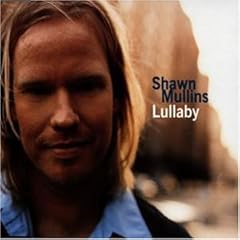
Wait a tick, look at that picture. I take it back, Sony didn't respect the guy at all to include such a douchey picture of him for the cover art. Seriously, he just went from looking like the hippie guy weighing tilapia for me at the co-op to looking like the date-rapist guy asking me for coke at the sketchy house party thrown by friend I don't know that well--soul patch and all. Granted, the picture was probably taken at the turn of the century when that look was cool. Oh wait, that look was never cool. Way to break the douche-o-meter, Shawn. And just when I was starting to like you too. Nice glasses though.

Download: Shawn Mullins - Lullaby
Download: Shawn Mullins - Shimmer

MySpace
Official Website
Buy Shawn's records at Amazon

10.03.2008

Canadian Wonder # 3 - Alannah Myles


EDITOR'S NOTE: I've had a few requests to shoot this blog up with a little estrogen before things get weird, but I didn't want to do an entry JUST cause someone is female, cause I feel that's some sort of political affirmative action I'm not ready to deal with, and it's unfair to the other artists. However, I am more than willing to write about someone just cause they're Canadian so here goes.

What comes to one's mind when the name Alannah Myles is uttered? Raven-haired? Beautiful? Sexy? Sensual? Smoky? Bewitching? Actually a witch? Canadian? All of the above?

Or maybe you have no idea who I'm talking about.

Born in Tornonto and reared on a ranch in Buckhorn, Ontario, Alannah Myles spent her early years riding horses and learning guitar, and at age 18 began performing covers and originals at music clubs in Southern Ontario, where she met future songwriting partner Christopher Ward.

According to Wikipedia, sometime in 1984, she appeared on the classic Canadian teen melodrama Kids of Degrassi in an episode entitled "Catherine Finds Her Balance." Myles was typecast as an aspiring singer.

After years of digging deep in the music clubs and A&R Great White North and coming up empty handed, Myles tried her hand at breaking into the US. Quite ingeniously, Myles came up with the idea of recording a video to go along with the demo of her song "Just One Kiss" that she was shopping around to various labels. Recognizing the quality of her songwriting and possibly being turned on/frightened by the fear that Myles might cast a spell on them with her sexy witch powers (these were men who had dealt with Stevie Nicks after all) , she was eventually signed to Atlantic Records.

Released in 1989, Myles self-titled debut landed big in Canada, led by the first single "Love Is" going to #5 on the Canadian charts. The album spawned another three singles, including the mega-hit "Black Velvet," propelling it to DIAMOND status in Canada, (like the US Platinum)--selling 1,000,000 copies, which means that a sizable chunk of the Canadian population was rocking out this album while ice fishing, curling, making a disproportionate amount of kids shows and movies for Nickelodeon, watching Kids in the Hall, chopping down trees, speaking French, being cold, or doing at least half a dozen other Canadian activities.

The album also sold a million copies in the US, though it had less reason to. The only song that was a bonafide hit in the US was "Black Velvet"--but lord a mercy, what a hit it was, hitting #1 on the Hot 100 and Mainstream Rock Tracks in March of 1990--unofficially making Myles the first one-hit wonder of the decade. Yet another glass ceiling broken, ladies.

Like another ultimate one-hit wonder before it ("American Pie") "Black Velvet" is a tribute to a dead rock star--in this case, a ballad tracing the tragic life of one Elvis Aaron Presley--the title referring to the the brand of product Presley used to dye his hair and give it that trademark black sheen. The track's production is all rootsy with a noirish vibe to it and a huge hook in the chorus. Myles' strong, husky vocals are quite gorgeous, even if they are hard to differentiate from other husky voices songstresses (Bonnie Tyler, Kim Carnes). The song is legitimately great and deserving of its success. It's well-written, memorable, nicely played and nicely sung.

The video was of course another reason for the song's huge success. All black tendrils, black studded leather jackets, black leather belts and big (black) eyebrows, Myles is all about some early '90s hotness. The look is country and rock n' roll all at once--basically she looks like a B-movie biker chick. Hot. But in all honesty, I'm not even sure this is really Alannah Myles. I'm thinking this might be Mary Elizabeth Mastrantonio playing Alannah Myles as a biker chick for the video.

And of course, her band looks like they just got kicked out of the hair-metal group Extreme, save for the lead guitarist who clearly thinks he's in a Def Leppard cover band.


The song was so huge, it got covered the very same year by country artist Robin Lee. Unlike the great Marc Cohn, Myles song wasn't able to break into the country charts, the reason seeming to be that Myles version was a) not quite bland enough and b) lacking pedal steel guitar. Other than that though, there's no real reason for this remake, except maybe they thought country fans would be scared of Myles. I can see that. Looking at Robin Lee, it's obvious why she appealed to mainstream country fans at the time--she's sort of like the home version of Myles--cute, but about as sexy as a mannequin at A Pea in the Pod. But damn, check out the Glamor Shot!


Substitute the black leather for a pink sweater--perfect. Safe, bland--just the way we like it.


The cover peaked at #12 on the country charts, becoming Lee's biggest hit.

"Black Velvet" had been Myles debut single in the US, so the record company went back and released her first Canadian single, "Love Is" as her second US single. Gone is the smoky, acoustic based blues-country sound of "Velvet" in favor of a more classic rock sound. It's a fine, catchy rock song and it's not hard to see why it was a hit elsewhere. Why didn't it hit here? Who knows? It almost sounds like a female version of Tom Cochrane's "Life is a Highway" which would come out a couple of years later, and it's not dissimilar from the slick blues rock Bonnie Raitt would achieve success with in 1991. Not to mention that she looked like a hotter version of ER's Julianna Margulies in the video. Maybe Myles was just ahead of her time.

Like the other Canadian Wonders, Myles went on to become a big star in Canada, winning all kinds of Juno awards and continued charting until 1997, including a number one hit "Song Instead of a Kiss" released in 1992--impressive considering "Black Velvet" had only reached #2 in Myles' home country. The hit came off of her second album, Rockinghorse, which sold 200,000+ copies in Canada, and I think I can see why.


Alannah Myles = horse porn pioneer?


Again, way ahead of her time. It would take Harry Potter at least fifteen years before he had the balls to get naked with a horse on camera. Amateur.

Alannah left Atlantic Records in 1997, and released one album on the ARK 21 record label, A-lan-nah.

After the release of the album, 11 years of silence followed.

The ensuing decade was brutal.
My dog died. War broke out. Natural disasters ravaged the US. Crash won an Oscar."Black Velvet" started to be dropped from "mix" stations. Mr. Rogers died. Britney Spears went batshit crazy. Ashton Kutcher shot to stardom. Katie Holmes married Tom Cruise. Arrested Development got canceled. I'm not saying these events were connected, but I'm not saying they're not either.

So thank god Alannah Myles returned in 2008 with a new album entitled, you guessed it, Black Velvet, which includes a re-recording of the title track. It's become popular for one-hit wonders
to re-record their big hit, probably under conditions that would enable them to receive more money than they get from the original recording. Naming her new album Black Velvet, most likely realizing that the uninformed consumer won't know the difference is a dubious practice at best, but whatever, it's also kind of genius. The version available on iTunes entitled "Black Velvet 2007" is a terrible techno remix, an approximation of Tatu or some other terrible, vaguely electronic group. Myles clearly hasn't lost her voice (unless they just used the original vocal track, which is possible), but the song's choice of direction is a weak attempt at injecting new life into a song that doesn't really need it in the first place.

While the album does offer up ten new tracks, the intent is clear: "if we use my one hit as the album title, suckers will buy the new, shitty version and I'll make some dolla billz, ya'll" (direct quote).

Now Myles she sits and waits for her big comeback, her hair now with a skunkish white streak, making her look even more sexy witchlike--or Lily Munster-like, really.


Download: Alannah Myles - Black Velvet
Download: Alannah Myles - Love Is
Download: Alannah Myles - Black Velvet (2007)
Download: Robin Lee - Black Velvet (cover)

Buy Alannah's stuff here
Visit her MySpace here

9.09.2008

Canadian Wonders #1 - Tom Cochrane

Who the hell is Tom Cochrane you ask?


Tom Cochrane is a few things:
  1. He is the guy who made "Life is a Highway" which went to #6 on the US Hot 100 charts in 1991.
  2. He is not Tom Petty, whatever Napster, Limewire, or Soulseek or other P2P program once told you. Petty did not sing "Life is a Highway." Ever. No, really, never. End of discussion. They don't even sound alike. They may be next to each other on your iTunes, but never mistake the two unless you want people to think you're a certified mouth breather.
  3. He is Canadian. He was born in Manitoba and grew up in Etobicoke, Ontario, and as far as I can tell he is something of a national treasure in our nation's hat. Because of this he is the first in a series dubbed "Canadian Wonders". The series will cover artists who, however briefly, broke through to US audiences before heading back to the land that gave us You Can't Do That on Television.
  4. He started out in the band Red Rider, who you may remember from such hits as "White Hot" or "Young Thing, Wild Dreams (Rock Me)". No? How about "Lunatic Fringe"?

  5. That searing stare. The fashion sense stolen from the Osmonds. That inability to even strum the guitar he's holding cause he's just so into singing about the lunatic fringe. The surprising presence of a black guy. Pure Cochrane. Still don't remember it? Well don't feel bad. They never broke into the Top 40 on the US Hot 100, though "Lunatic Fringe" did hit #11 on the Modern Rock charts.
  6. Probably disgustingly rich. "Life is a Highway" has been used in numerous TV ads, movies, TV shows, etc. It has also been covered twice by American country artists, first by the semi-well known Chris LeDoux who released the song in 1999, only to have it stall at #64 on the country charts and birth a crappy video that looks more like a clip from Hey Vern, It's Ernest! (note the presence of a keytar):


  7. It was also a huge hit for Rascal Flatts on the Cars soundtrack, going to #7 on the US Hot 100 charts and even charting in Cochrane's native land, going to #9 on the Canadian charts. Their version changes nothing from Cochrane's version aside from sonically castrating the song's kick-ass chorus with the lead douchebag's whiny vocals. I refuse to even post a YouTube video of it here as it's amazingly redundant and shitty. Seek it out if you must, but don't blame me if you wake up soaked in a disturbing mix of cold sweat, hair gel and Abercrombie Woods cologne.
  8. Cochrane is, at least in the US, a one-hit wonder. But he didn't want to be.
Cochrane followed "Highway" up with two singles from his album Mad Mad World.

First was "No Regrets," another driving rocker in a similar vein to "Highway". Unfortunately, like so many second singles, it may have been too similar, featuring the same reverbed drums, chorus of backup singers and insistent guitar of "Highway," but missing the huge payoff huge hooks of that hit. And where "Highway" had an incendiary harmonica play out at the end of the song, "No Regrets" opts instead for a saxophone.

Uh-oh. Bad choice.

As any rock fan can tell you, when a sax is used properly, it can't be beat. What would Pink Floyd's "Money" be without that tenor sax solo by Dick Perry? Unfortunately, many '80s producers listened to great rock songs like "Walk on the Wild Side" and "Shine On You Crazy Diamond" and must have thought a sax solo was the key to a classic song. This was not the case--sweet Jesus, it couldn't have been further from being the case. The producer of Cochrane's album almost certainly had a hangover from '80s productions, which isn't surprising since the album was probably made in 1990, when saxophone was still king. Many cite the synthesizer or the sampled drum beat as the worst examples of '80s production; they're wrong, it was the saxophone.

"No Regrets" didn't even chart on the US Top 100, but it did manage to go to #7 on the Modern Rock charts, keeping Cochrane in the game for a little longer. Unsurprisingly, the song was a huge hit in Canada. Then he had two more hits in Canada ("Sinking Like a Sunset" and the title track "Mad Mad World").

Still, Cochrane tried his hand at shaking the one-hit wonder blues one more time. But this time he steered clear of trying to duplicate "Life is a Highway" and instead went for another cherished '80s/early '90s staple: the power ballad.

"Washed Away" has got it all: palm muted staccato guitars (think Mike & The Mechanics), strings, big drum breaks, uplifting lyrics about redemption, and one of those outros where the singer is feeling the passion in the song so much, he's reduced to primal screams (while making sure to stay in key). There's really nothing in this song that says it shouldn't have been a hit--except that it's done by Tom Cochrane. If this had been released under Don Henley or
Glenn Frey's name. Also it's like five-and-a half minutes. C'mon, Tom! This is the early '90s. I can't be bothered listening to Tom Cochrane wail for nearly 10% of an hour. I have Designing Women to watch.

"Washed Away" got to #88 on the Mainstream Rock charts and didn't chart on the US Top 100.

But don't feel bad for Mr. Cochrane. He may not have made it in the US again, but Cochrane's career was far from over in Canada. Mad Mad World spawned four Top Ten hits on the RPM Charts (?) and he would have another three top tenners from his next album Ragged Ass Road before sliding down the charts in the late '90s. He also won seven Juno Awards (the Canadian Grammys) and received a National Achievement Award from SOCAN in 2003, a Canadian copyright organization. Looks like he's doing just fine.


Click here to learn more about Tom Cochrane and buy some stuff from him.