1.24.2009

BoDeans

Most bands--no matter how long they've been around--get one shot at the big time. Seniority doesn't mean squat in the music business--you're only as good as your last charting single.

Take the BoDeans. The band was named "Best New American Band" by Rolling Stone in 1987, following the release of their second album. Yet they didn't have a hit until 1995--and even then, it was a complete fluke, and turned out to be their first and last brush with the big time.

The beginnings of the BoDeans reach back to 1979, when singers/songwriters/guitarists Sam Llanas and Kurt Neumann started playing together in their hometown of Waukesha, Wisconsin while still in high school. The band later added a drummer and bassist and in 1985, signed to Slash Records, a subsidiary of Warner Bros. and entered the studio with famed producer T-Bone Burnett (Counting Crows, The Wallflowers). The debut, Love & Hope & Sex & Dreams was released in 1986.

Their sophomore effort, 1987's Outside Looking In managed to reach a broader audience. With the Talking Heads' Jerry Harrison (Live, Crash Test Dummies) at the helm, the band broke into the big time, opening for U2 and breaking into the Top 100 best sellers album charts.

Home and Black and White followed in 1989 and 1991 respectively and were met with mixed reviews, but it would be 1993's Go Slow Down that would eventually help break the band to mainstream pop radio--eventually being a key word here. Hooking up once again with producer T-Bone Burnett, the group decided to return to a more acoustic folk-rock sound. The album was released in October of 1993, and, while being critically acclaimed on its initial release, didn't fare much better than their previous works commercially.

The single may have had something to do with it. On an album filled with great pop-rock songs, the band released "Feed the Fire," a standard rock song that has "'90s alternative" written all over it. Pained howls, tremolo-ed backing vocals, a coda repeated to the point of annoyance. It's what I call "Collective Soul rock"--music that sounds like a Seattle band and hits all the right notes a Seattle band might, but ultimately is lacking. It's made by guys who don't get it--which isn't good, since, in my opinion, that type of Seattle rock--with a few exceptions--is pretty damn boring to begin with. "Fire" isn't a bad song, but it sounds more like a filler track than a hit single, and it's far from being the best representation of the album.

But a funny thing happened--two and a half years after the release of Go Slow Down, the producers of the uber-'90s Fox primetime soap Party of Five selected the lead track, "Closer to Free," for the show's theme song.

NOTE : Matthew Fox's awesomely floppy hair.
Why he doesn't sport that on
Lost, I will never know.

"Closer to Free" was a driving, jangly pop song in a similar vein to '80s R.E.M. and was indicative of other folk-based college rock that became popular in the post-grunge rock scene (Hootie and the Blowfish, Blues Traveler, etc.). Slash Records released the song as a single--there had never been a follow up to "Feed the Fire"--and thanks in no small part to its weekly presence on the show, the song became a hit on the Billboard Hot 100 (#16), Top 40 Mainstream (#6) and Adult Contemporary Top 40 (#3)--nearly three years after the album's release. Oddly enough, it didn't chart on either the Modern Rock charts or the Mainstream Rock charts, where the band had charted five times before.

To capitalize on the success of "Closer to Free," the BoDeans headed back into the studio and released Blend in 1996, led by the single "Hurt By Love." "Hurt" is a fine ballad, and sounds a bit like a slowed down version of "Closer." With its jangly guitars and emotional vocals, it could easily pass for a Gin Blossoms song. The problem was, the popularity of that brand of catchy college rock was starting to fade (except from colleges, where the BoDeans continue to do a business). Had the record company given the BoDeans the same kind of push even a year earlier, their success might have had a chance to continue. The song was a minor hit on Top 40 (#39) and the AC Top 40 (#33). It is their last charting single to date.

In the late 90s, Neumann and Llanas decided to take a break and make time for solo projects. Their next release wasn't until 2001--a greatest hits compilation called Slash and Burn followed two years later by The Leftovers, a rarities comp. During this time they also found themselves in a three year long court battle over their contract with Warner Bros. Their next album, Resolution, wasn't until 2004--a full eight years after Blend. It was released on the independent label Rounder.

2005 saw the release of a 2-disc live album and DVD, Homebrewed: Live from the Pabst--fittingly, the set on the live disc ends with "Closer to Free."

The band continues on--touring occasionally, usually using an acoustic set up after losing their upteenth drummer (shades of Spinal Tap--lets hope it wasn't spontaneous combustion). They released their latest album, Still, in 2008.

I think it's fitting to end this post with the opening of Party of Five's mercifully short-lived spin-off 1999's Time of Your Life which featured the BoDeans covering The Beatles' "I've Just Seen a Face."


Now if someone could just tell me what the hell a BoDean is, we'd be all set.

FIRST SINGLE ("Closer to Free"): A-
SECOND SINGLE ("Hurt By Love"): C+

Random Single: ("Feed the Fire"): C


Download: BoDeans - "Closer to Free"
Download: BoDeans - "Hurt By Love"
Download: BoDeans - "Feed the Fire"

Visit Bodeans.com and buy BoDeans stuff

1.11.2009

The Cardigans

One-hit wonders come in so many forms. For some, it's the only decent song they ever wrote. For others, it's just the only one that hit big.

But for a band like the Cardigans, it's a different story. The Cardigans are a Swedish band who have been making music since 1992, and have had continual success before and after their big U.S. hit "Lovefool" in the UK and other non-English speaking European countries like Sweden, France, Norway and Germany. We in the U.S. usually measure the success of a band by how big they are in our country, which is hard not to do when you see that, for instance, '80s rockers Night Ranger sell out stadiums in Japan. But that line of thinking causes us to miss out on a lot of great music.

The Cardigans came together when two heavy metal musicians, Peter Svensson and Magnus Sveningsson decided to record a pop demo with singer Nina Persson--who, with her petite frame and steely blue eyes, is/was one of the most beautiful women to emerge in rock n' roll since Deborah Harry. In 1994, the group released their debut, Emmerdale, and their first single "Rise & Shine," which would go on to become a hit on Swedish radio. The group followed it up with Life, which sold over a million copies worldwide and went platinum...in Japan.

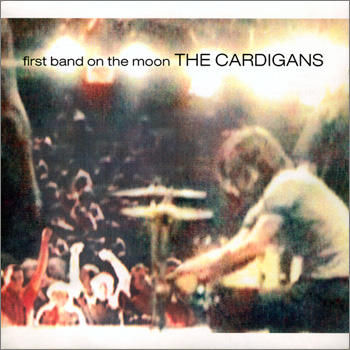
Around this time, U.S. labels began to take notice of the international sensation that The Cardigans had become. The group signed to Mercury Records and released 1996's The First Band on the Moon. Persson's lyrics delved into darker places than their previous recordings, dealing with heartbreak and infidelity. Thanks in part to the first single "Lovefool," the album went platinum in Japan in record breaking time and achieved gold status in the U.S.

"Lovefool" is a feather-light pop ditty with a melody and beat so catchy, it has since been used to comedic effect as the prototypical song that can get stuck in your head after uttering only a few lines of its bubblegum chorus (see The Office (US) Season 3, "The Initiation"). Love me, love me, say that you love me...See? it's stuck in your head already.

The song's success was buoyed by its appearence on the highly successful William Shakespeare's Romeo + Juliet soundtrack. And like so many other one-hit wonders of the '90s, the band appeared on Beverly Hills 90210, all but cementing their status as one-hit wonders.

The song also birthed two different videos--a disturbingly funny and sexual one for European audiences and a more cartoony, MTV friendly one for U.S. audiences. The European version features a group of men (who I assume are the male members of the band) entering a warehouse that turns out to be a brothel offering sometimes garishly made up middle aged prostitutes. The men all look extremely bored as the hookers grind in their face. Off to the side, the video cuts between one of the men is listening to a tape made by Nina Persson, and Persson herself recording the tape (which is made up of the lyrics). At the end of the tape, the man appears to be crying while one of the hookers grinds on him, that is until Persson enters the brothel and the two are reunited at last. It's as weird as it sounds, and probably weirder. This one is superior for many reasons, not the least of which is that Nina Persson looks like some beautiful Nordic pixie goddess that will have you scrambling on Priceline for a ticket to Sweden (not that she looks bad in the U.S. version, but there's just something about her in this one...).


The second one is the one you always saw on TV if you live in America, the band stuck in a bottle that was passed out to sea by a castaway. This one was often shown with clips from Romeo + Juliet interspersed throughout.


"Lovefool" charted in practically every country on God's green goodness:
Sweden - #15
Australia - #11
Austria - #7
France - #31
Germany - #6
Latvia - #2
Switzerland - #22
UK - #21 (rerelease hit #2 in 1997)

And of course, in the U.S. it was #1 on the Billboards with a bullet. And when a band has known that high a level of international fame, it's nearly impossible to follow up--but as usual, they tried.

"Been It" was the follow up single. And what can you say? It's far more in line with the rest of the album and the band's other material than the lite-pop of "Lovefool." It's a beautifully catchy pop-rock song, though admittedly, it isn't as immediately toothache inducing as the hit. It's a little more rockin' (okay a lot more rockin', with a pretty sweet little riff to boot), a little less poppy and the lyrics couldn't have helped:

I've been your mother, I've been your father
who can ask for more
I've been your sister, I've been your mistress
maybe I was your whore
who can ask for more

Not the stuff pop hits are usually made of, Nina.

"Been It" only reached #72 on the Billboards U.S. and #56 in the UK . This is one of those things where there's seemingly no rhyme or reason to it, except that the song was so overplayed at the time that people came to associate The Cardigans with "Lovefool" and only "Lovefool." It was the last Cardigans single to chart on the Hot 100 in the U.S.


No matter though, the band went on to make great music and experienced continued success in Britain, Japan and other countries outside the U.S. (they've charted nearly a dozen times in the UK since "Lovefool"). Their follow up album, 1998's Gran Turismo, outsold First Band on the Moon by a half a million copies, though it only made it to #151 in the US. The album did birth one hit on the Modern Rock charts, "My Favourite game" hit #16 after being included on the video game also titled Gran Turismo. The controversial video didn't hurt either.


That album also features one of the band's best songs, a deep cut introduced to me by a friend on a mixtape--"Junk of the Hearts," an absolutely gorgeous country-ish love song with some lovely pedal steel work and some great rock flourishes.

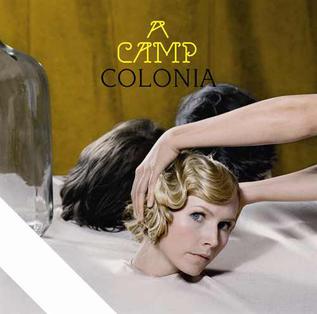
The Cardigans have released two albums in recent years, 2003's Long Gone Before Daylight and 2005's Super Extra Gravity. While the album sales aren't what they used to be (note: the drop in sales correlates directly to the bands decision to stop including Black Sabbath covers on each album; coincidence, I think not), the band hasn't called it quits just yet. They're currently on hiatus, though there are plans to reunite. And in the meantime, Nina Persson has released two albums with her husband, ex-Shudder to Think member Nathan Larson under the name A Camp. Their new album, Colonia, is to be released February 2, 2009. Persson is currently touring in support of the album.

In 2008, a 2-disc Best Of compilation released in Europe cemented their status as international superstars. Appropriately enough, there are no plans to release the album in the U.S., though it can be purchased as an import. U.S. listeners owe it to themselves to give The Cardigans a chance; they really are better than your average pop band.

Oh, and Nina Persson is still gorgeous.


THE FIRST SINGLE: B+
THE SECOND SINGLE: A-


Download: The Cardigans - Lovefool
Download: The Cardigans - Been It

BONUS Download: The Cardigans - Junk of the Hearts

Buy Cardigans stuff!

1.10.2009

Second Single Update! Jamie Walters

Erstwhile teen soap star and singer Jamie Walters is appearing alongside other obscure former teen idols like Jeremy Jackson, Eric Nies and, er, some other dudes who will test your pop-culture trivia knowledge (their use of the word idol is about as loose as your average Rock of Love contestant...hi-yoooo!) for a new VH1 show entitled Confessions of a Teen Idol. The show sports the tagline "Fame is a bitch. And they all want her back." So you know it's gonna be good.

Check out this interview with Walters on Entertainment Weekly's PopWatch blog for more info on the show, what the man has been up to since his fall from grace, why he has so many damn tattoos now, and why the 90210 writers didn't redeem Ray Pruitt after he threw Donna down the stairs.

Also, if you haven't, read the Second Single entry on the guy and download his hits "How Do You Talk to an Angel?" (with The Heights) and "Hold On."

1.05.2009

Belly

Of all the negative things to come out of the '90s alternative music boom, one of the positives was how the surge of interest in alternative styles of music allowed female fronted groups to move to the forefront. While women rockers like Janis Joplin, Blondie and Joan Jett had experienced success in the male-dominated rock world with and without the use of their sex appeal, those artists seemed to be the exception to the rule.

But in the post-Nirvana world, the likes of Kim Deal of The Pixies and The Breeders, Kim Gordon of Sonic Youth, Liz Phair, and to some extent, Courtney Love, were able to move to the forefront without having to sex themselves up or down to either appeal to men or to blend into the male-dominated scene. They could be girls but they could still rock, and in a real way, not in the pop songs in rock clothing way that Avril Lavigne and Ashlee Simpson have made so popular this decade. Yet their songs retained a distinctly and unabashedly feminine sound. These women weren't trying to make up for anything, they were self-assured enough to do their own thing, knowing it would attract an audience.

Belly was not only part of this emerging scene, they were, in a sense, a product of it. Having cut her teeth as a songwriter and singer in female dominated indie bands Throwing Muses and the aforementioned The Breeders, Newport, Rhode Island native Tanya Donelly decided to start her own project which she dubbed "Belly"--a word she found "both pretty and ugly." Formed in 1991, Belly hit the scene just in time for women-in-rock's big break--a break that would pave the way for everyone from 4 Non Blondes to Luscious Jackson (incidentally, both upcoming installments to The Second Single).

Belly first hit with the Slow Dust EP in 1992, which shot to number one on the British indie charts. At first listen, the group's sound wasn't dissimilar from that of Donelly's old groups--but there's a bit more of a shoegaze influence going on with Donelly's vocals buried in a mix of sparkling reverb behind a wall of distorted guitars all enveloping the hooky melodies. The group often drew comparisons to so-called "dream pop" bands like The Sundays and Lush, and the influence is clear--but Belly were contemporaries of these bands, and most likely the artists all had a reciprocal relationship.

It wasn't long before Belly had a full length record in the can and a big hit on their hands in Britain--the album, 1993's Star (Sire/Reprise), hit number two on the British charts. The group's success in the UK wasn't unexpected--they had been signed to the Brit label 4AD across the pond--but Belly's success in their home country was a bit more surprising.

The first single, "Feed the Tree" is what did it. The strangely intriguing lyrics, powerhouse chorus, sexy vocals and of course, the oddly literal video, garnered the group top spots on MTV's Buzz Bin and Alternative Nation (a big deal at the time for all you youngsters). The song reached #1 on the Modern Rock charts and while it barely eked into the Billboard 100 (it reached #95), it didn't matter--by that time modern rock radio had emerged as the format to be reckoned with and MTV was beginning to have as much impact as Top 40. Star was a certified gold record.


The group followed "Feed the Tree" with a song from their first EP that had been rerecorded for the album, "Gepetto." The song is a beautifully constructed singalong, perhaps even catchier than "Tree," though it lacked the unusual sensuality that the hit possessed. The song reached #8 on the Modern Rock charts and failed to chart on the Billboards. A third single, "Slow Dog" was released and hit #17 on the Modern Rock charts.

Belly - Gepetto


Belly would only make one more album, 1995's King. The album revealed Donelly delving even further into mainstream pop-rock, leaving behind any indication that she was once an indie queen. The album was a risk--leaving behind the old indie fan base in favor of mainstream success. Unfortunately, the plan backfired--King wasn't a hit with mainstream audiences and left old Belly fans either angry or scratching their heads. Not to mention it was ill-timed--the same modern rock radio that had embraced Belly two years earlier had now turned its attention back towards male dominated hard rock, leaving little room for the spacey pop Belly provided. It might be a good time to note that Belly's appearance on Rolling Stone (top of the page) was published during their promotion for King.

The band broke up in 1996. Immediately after the break up, Donnelly embarked on a solo career, releasing a solo EP, Sliding and Diving, the same year. A year later she released her full length debut, Lovesongs for Underdogs and has since released three more solo albums to little fanfare but much critical acclaim. Her sound has veered away from the pop-rock she was known for and towards sparsely arranged country influenced acoustic folk-pop.

In 2000, Donelly reunited with the Throwing Muses for a couple of shows, and while a Belly reunion has yet to materialize, Donelly still plays her hit songs at her solo shows.

FIRST SINGLE: A
SECOND SINGLE: A


Download: Belly - Feed the Tree
Download: Belly - Gepetto

Buy Belly music!
Buy Tanya Donelly music!