9.22.2008

Primitive Radio Gods - "Motherf**ker"

Few one-hit wonder songs from the '90s hold up as well as Primitive Radio Gods' "Standing Outside a Phone Booth With Money in My Hand." The song was ahead of its time with its perfect use of a B.B. King sample and hip-hop beats mixed with a more traditional piano-based rock ballad. How could a song so good lead to jack shit?

But first, let's get the other stuff out of the way. who the hell were Primitive Radio Gods anyway? Where did they come from and where did they go?

Primitive Radio Gods' story is one of extreme disappointment, extreme luck, then just regular disappointment, followed by more extreme disappointment.

The Gods' album Rocket started as a project by Chris O'Connor, the bassist/singer from some Southern California band called I-Rails. Around 1990-91, O'Connor made a demo of ten hip-hop inspired tunes on a shoe-string budget, recording in a friend's garage using a barely-working 16-track tape deck. He sent the tapes out to local radio stations under the moniker "Primative Radio Gods" (sic) expecting airplay, but instead got silence.

And O'Connor became so used to the silence he decided he'd continue the silence with a job where he couldn't hear shit. He used his Navy training to become an air traffic controller at LAX and got to wave those glowsticks and wear those super-intense ear muffs--no doubt working to muffle the cries of his inner thoughts, screaming at O'Connor that he should be backstage somewhere, doing blow off Winona Ryder's big toe.

Instead he wussed out, put the tapes in storage and forgot about them until 1994 when he finally grew a pair--or had some surgically implanted--and decided to send the demo out to a bunch of record labels as a last ditch effort to revive his flagging music career (get it? Flagging! Cause he flags down planes! No, I'm not Bill Shakespeare, I get that a lot though).

Weeks later, O'Connor heard from the executive of Fiction Records who said that he was very interested in the demos, but namely one song--"Where the Monkey Meets the Man." Okay, not really. Predictably, the exec. liked the only song worth a damn, "Standing Outside a Phone Booth..." and soon O'Connor found himself with a publishing deal, a contract with Columbia Records and "Standing" on the uber-'90s soundtrack to the massive box-office failure, The Cable Guy--directed by Ben Stiller, written by Judd Apatow and starring Jim Carrey, and nobodies like Jack Black, and Owen Wilson. Of course that movie would fail! We were all geniuses in the '90s. We knew what was good. Batman Forever, now that was a fuckin' movie!

The song became a huge hit, going to #7 on Top 40 and #1 on Modern Rock Tracks. Kids and grandparents alike were singing the B.B. King sample at the top of their lungs, "I been downhearted baby, ever since the day we met!" and people were so pumped by the song, they went out and bought the album.

Er, bad idea. You see, the album, to put it in Wesley Willis terms, sucks a caribou's asshole. "Standing" is, like so many other one-hit wonders, far and away the best song the band ever released and not at all indicative of the rest of the band's work. At the time the song may have seemed like a novelty, but with its earnest lyrics, inventive, lo-fi production and innovative sampling it was ahead of its time and wouldn't sound out of place coming from a lot of current indie bands. The song is actually affecting--I still get chills up my spine when O'Connor begins to sing the B.B. King line right before the song delves into instrumental feedback and dissonance.


Unfortunately, the same can't be said for their great choice of follow up single--"Motherf**ker." Right off, that song has hit written all over it, right? It should be noted that I'm not censoring myself, I'm writing the word at it is written on the back of the album, and in turn, the word that earned them the much coveted "PARENTAL ADVISORY" sticker. I don't know if they bleeped it on radio cause, frankly, it was never really played on radio.
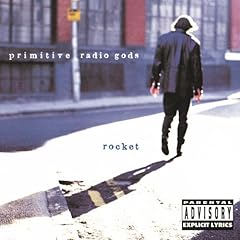
Sure, "Motherf**ker" isn't bad for a lo-fi alternative funk-rock song with hip-hop elements. Okay, yes it is. First, there's this annoying siren that plays throughout the song, as well as a beeping that sounds like a garbage truck backing up. Then, O'Connor tries to actually sing on this one--gone is the low-key talk-singing he did on "Standing." His voice cracks and breaks any time he goes out of his vocal range several times, making him sound more like a terrible Soul Asylum tribute act vocalist than a singer with a major label contract. Add to that the atonal, amateurish lead guitar that has not one, but two solos. The chorus is the only decent part, but it sounds like it was taken from an '80s monster ballad and sticks out like Sarah Palin at a PETA meeting (topical reference quota fufilled).

Perhaps the worst part is the production. It doesn't just sound cheap, it sounds like a cheap record where the producer desperately wanted to make it sound expensive--and failed miserably. We know O'Connor made it under less-than-ideal circumstances, but tons of great records have been made with fewer resources than he had and sound a lot better (Bleach, Bee Thousand, Nebraska, to name a few)--hell, "Standing" perfectly utilized his cheap tools and budget; it sounded cheap, yes--but in a creative way, like when you were a child and your parents would give you a cardboard box and magic marker and tell you to make a game and you had more fun than you would playing Sega Genesis or Ninja Turtles.

(No? No one else's parents did that? Just mine? Okay.)

Despite Rocket being cerfitied gold, "Motherf**ker" received no promotion by Columbia, who clearly saw "Standing" for the fluke that it was. And in a case of assholism that might make even James Spader's character in Pretty in Pink gasp, the label dropped them soon after.

Things only got worse from there on out. The group was lucky enough to have a fan in the executive from Columbia who had signed them in the first place--Jonathan Daniel. Having moved on to Sire Records, Daniel got the group a deal at Sire to release their follow up album, Mellotron On! Unfortunately, Sire was merging with London Records at the time and were having issues negotiating the release of Mellotron On! During the hiatus, the band was forced to go back to day jobs--O'Connor held out for as long as he could by living off songwriting royalties, but eventually he caved in and became a flower delivery boy. Yikes.

After they were dropped from London-Sire, Daniel once again stepped in and signed them to his independent label, What Are Records? where they released a modified version of Mellotron On! titled White Hot Peach. The album did nothing on the charts and after releasing a couple of other EPs and compilations, the Gods moved on to releasing music independently from their website.

Most recently they released an mp3 Internet-only, "shoegaze inspired" album titled Sweet Venus on their website. The only information I can find on it is from some Australia-based music magazine called Tomatrax, which listed one of the album's songs as #1 for 2006. Check out their site if you want, (it's hosted by geocities, so you know it's legit).

Next time we'll talk about an artist who made one hit and disappeared into the ether, never to be seen again--something Primitive Radio Gods probably should have considered.

Download: Primitive Radio Gods - Motherf**ker
Download: Primitive Radio Gods - Standing Outside a Broken Phone Booth with Money in My Hand

Visit their website and buy stuff here!

9.15.2008

Martin Page - "Keeper of the Flame"


If today's artist ever wrote himself a PR blurb, it might read something like this:

Did you ever have a hankering to hear some Sting but were so disturbed by images of him and his wife, Trudie Styler, in various sexual positions, liberally incorporating the practice known as Tantra? Just wish you could hear his music and think of nothing and nobody actually playing it?

You do? Really?

Meet Martin Page.

Born in England, in 1949, Martin achieved fame and fortune as a pop-songwriter, writing smash hit after smash hit--songs like 'We Built This City' for Starship and 'These Dreams' by Heart. In fact, think of a song you consider the nadir of '80s pop music. Thought of it? There's a 90% chance Martin had something to do with it.

He is a former member of techno-pop group Q-Feel--not to be confused with Q-Lazarus--and enjoys the music of other cultures. That is to say, he really likes Paul Simon's Graceland and Peter Gabriel.

The title track off Page's 1994 album, In the House of Stone and Light, is an amalgamation of everything I hate about '90s Adult Contemporary. White guys playing music 'infused with world rhythms'--shorthand for having African singers and drums dubbed over your white-guy pop song--that sounds like something they'd put on the Pure Moods compilations and play at Pier 1 Imports.

Oh, and the lyrics. It's another New Aged themed song about spiritual concerns meant as something of an anthem for liberal white people who consider themselves "spiritual" but not "religious". Driving home this vagueness are the only two specific references--the first to Mount Kailas, and the second to a "Havasupai shaman." Both references seem to be apropos of nothing.

Now...the Havasupai are a Native American tribe located in Arizona. They probably have a shaman, or spiritual guide, I guess. And Mount Kailas is a spiritual mountain in the Himalayas--far, far away from Arizona. At least be consistent with your vague spiritual references, man. Now we just feel insulted.

I like to think that, when he was writing this song, he had a checklist of New Age buzzwords to throw in and get people who do yoga and wear hemp clothes all excited. The people who like to say "I borrow from all religions." You know the type; they wear patchouli, eat raw foods, go to Yanni and Enya concerts, wear lots of hideous turquoise jewelry and run day spas. They talk about dogma and ask you what your sign is and have African masks on their walls that they're dying to tell you about.

Picture Tim Robbins in High Fidelity. That's them. They used to be called hippies, now they're just called weirdos or cult members. At least by me.

And they would eat this song (and video) right up.


He's even playing the bass like Sting. Give it up dude, we already have a Sting and God (or Havasupai shaman or Krishna or whoever) knows we don't need another. It's just embarrassing.

To be fair, as far as Sting rip-offs go, there have been worse. Sonically, it sounds almost perfect-- and it should. Page's album featured an all star cast of musicians totally embarassed to be there--Robbie Robertson played guitar and Phil Collins played drums, and that's just for starters.

Predictably, "In the House of Stone and Light" went to #1 on the Adult Contemporary charts, hit #14 on the Hot 100 and went all the way to #9 on the Top 40 chart.

And then came the inevitable follow up: "Keeper of the Flame." Why didn't you hear it? Maybe you did, it didn't do too poorly, reaching #14 on the AC charts, but there's also a distinct possibility that you thought it was the same damn song.

But there is one huge difference in this one, Page isn't singing about vague spiritual concerns, but rather, love. The song is basically about a guy who wants a girl to "know his name" and he explains that she will know it one day, when he is the "keeper of the flame," wherein her heart is the flame. Or maybe he's just going to burn her until she agrees to have sex with him, again, Page is incredibly--almost masterfully--vague.

Whereas the "Stone and Light" was a fine facsimile of Sting's music, "Keeper of the Flame" comes off as a really bland Peter Gabriel b-side. One that wouldn't ever end up on a compilation cause everybody, even Gabriel, would have forgotten the song ten minutes after recording it.

It ended there, with "Keeper" being the second and final single from the album and then...nothing. Complete silence from Martin.

For years, 50-year old hippies would sit in their "energy rooms" sipping their herbal tea, resting after their Kabbala exercises and discussing Harmonic Convergence and someone would inevitably ask, "Martin Page, what became of you? Did you find the Havasupai shaman? Was your soul cleansed?" And the room would fall to a mournful silence.

Mourn no more, creepy tree-huggers, cause he's back. That's right; Martin Page has recently (self) released a follow-up album titled--I kid you not--In the Temple of the Muse. One can only guess what lies beneath that gorgeous gold hued cover. The key to wisdom? The gateway to his soul? The path to a non-religious specific heaven? Maybe.

Or maybe it's just a bunch of crappy Sting rip-offs.

Download: Martin Page - In the House of Stone and Light
Download: Martin Page - Keeper of the Flame

Martin Page.com
Martin's MySpace

9.11.2008

Canadian Wonder #2 - Crash Test Dummies


If I had been really thinking ahead in 1993, I would have made a pop culture time capsule, just to represent where America's mind was in that year.

In the capsule would have been a VHS copy of Pauly Shore's Son in Law, a John Stockton Utah Jazz jersey, a couple of R.L. Stine Goosebumps novels, and, without a doubt, a cassette single of the Crash Test Dummies' hit single "Mmm Mmm Mmm Mmm."

What was going on in 1993 that would allow Americans to accept such a bizarre song into their homes and cars? Did the Bills losing their third consecutive Super Bowl open a door to an alternate universe? Did David Koresh seek vengeance on America from beyond the grave by making a Pauly Shore movie a box office smash and giving R.L. Stine an insanely lucrative career as an author? Maybe a gas leak that reached every suburb in the country?

But I digress. Perhaps "Mmm Mmm Mmm Mmm" isn't even the most unusual one-hit wonder of the '90s. Might I remind you that just a year earlier, a Flatwoods, Kentucky redneck with a mullet the size of which no man can measure unleashed "Achy Breaky Heart" on an unsuspecting public? And when there are artists like Green Jelly and Willi One-Blood out there, you can't call it the weirdest--but it's probably in the top 5.

The thing about "Mmm" is that a description of the song can't really do it justice. I'll give it a go though: "Mmm Mmm Mmm Mmm" is a a folky alternative rock ballad that tells three different stories of bizarre hardships suffered by children, sung by a vocalist who vaguely sounds like he's just inhaled sulfer hexafluoride, with each verse followed by a chorus that's entirely hummed (hence the onomatopoeia title). That's as good as I can do and it still doesn't hit on the specific creepiness of the lyrics about girls with birthmark ravaged bodies and boys whose parents belong to a strange, unnamed religious sect that requires them inact seizures from their pews. This being the '90s, the song was of course given the MTV treatment with a strange little video that featured children acting out the incidents in the Dummies' song as one-acts plays (shades of Rushmore), as well as an excessive number of shots featuring vocalist Brad Roberts' making peculiar facial expressions during the chorus (gotta emote somehow when you're humming I guess).

The first single from their second album, God Shuffled His Feet, the song was a worldwide hit, going to #4 on the Hot 100 US chart, #2 in the UK and #1 in Australia. Surprisingly, in their native Canada (they hail from Neil Young's town of Winnipeg, Manitoba), the tune didn't even break into the top ten, falling behind the success of the group's first single, the amusingly earnest "Superman's Song," which hit #4 in Canada and only made it to #56 in the US.

But these are just numbers. For time-tested, scientific proof that this song was a massive hit, we turn to our friend "Weird Al" Yankovic, who turned his mad parodyin' skills on the tune with "Headline News"--a song that replaced Dummies' lyricist and singer's stories about childhood oddities to humorous accounts of Michael Fay's caning in Singapore, the Nancy Kerrigan/Tonya Harding incident and Lorena and John Wayne Bobbit's ordeal, the climax of which was described with one line, where Bobbit awakens to find that "Mr. Happy was missing." Oh, "Weird," what will you do next?

But how to follow up such an unusual hit single? The problem is, you really can't.

After the non-showing that was the group's next single, "Swimming in Your Ocean," a slightly more uptempo and rocking track with a video possibly creepier than their hit single's , the group managed to hit the US charts again with "Afternoons and Coffeespoons," a song based on the freshman English student favorite The Love Song of Alfred J. Prufrock, a poem by T.S. Eliot. If we learned anything from Andrew Lloyd Weber's CATS--a musical adaptation of Old Possum's Book of Practical Cats--it's that T.S. Eliot poems do not translate to popular media. Brad Roberts and the rest of the Dummies were apparently unaware of this fact. But who am I to criticize? CATS ran for approximately 80 years on Broadway, so maybe they were hoping for quantity and longevity instead of quality.

But again, here's an example of a song that's not bad at all. It's a fun, catchy song. Not great, but it's a fine follow up, but likely not what the public was looking for. Unless you count the references to T.S. Eliot or Roberts' vocals, there's nothing all that unusual, and, despite an enjoyably hooky chorus, to audiences today it may come off as a bit generic. Dare I say people might have wanted it a little bit weirder? The music, instrumentation and song itself doesn't sound that far removed from the '90s roots based college rock bands to come later in the decade--Blues Traveler, Hootie and the Blowfish, etc. Except it has that voice, which, granted, sounds far more palpable on this track. Still, I'd wager US audiences just weren't ready to hear that voice outside of any context except "Mmm Mmm Mmm Mmm." "Afternoons and Coffeespoons" peaked at #66 on the Hot 100 charts.

But for me, I never even heard "Afternoons and Coffeespoons" on the radio. The next Dummies single I heard was a cover of XTC's Nonsuch classic, "The Ballad of Peter Pumpkinhead" which was released on the original soundtrack to Dumb & Dumber--a movie which also featured "Mmm Mmm Mmm Mmm," though it wasn't included on the CD. "Pumpkinhead" is a fairly straightforward and unimaginative remake of XTC's hit, except there's something unusual about it. See if you can guess what I'm talking about:

No, not the Jeff Daniels cameo, though that is quite awesome. No, it's not that they omit the second verse from XTC's original (though they do, and huzzah for noticing). Get this: Brad Roberts is only the backup vocalist! He's not singing lead! Yeah! They've got some chick named Ellen Reid singing lead. Who's Ellen Reid? How the hell should I know? Far as I can tell she was a band member who usually sang back up, but they gave her this shot since Roberts, no doubt, couldn't quite reach those Andy Partridge notes very easily.

Now, forgive me, as I'm about to contradict myself. I realize I just said "Afternoons and Coffeespoons" didn't hit because people couldn't get down with Roberts' voice, but in the end, that is their hook. Roberts' voice is the band. You either like it or you don't and there's no in between. If the track were just a one-off for the soundtrack, it'd be one thing; but they released it as a single! Bad move. Makes it look like you're trying to change the band's image and sound by changing what makes the band unique (even if not everyone likes it). Giving some generic chick the mic just makes you into a generic bar band. Sorry, Dummies, but The Second Single is all about tough love. There will be no coddling here.

Though God Shuffled His Feet was the pinnacle of the band's career, the Dummies nevertheless charted with their next album, A Worm's Life, and continued to be successful in Canada up through their fourth album, Give Yourself a Hand, which reportedly found Reid taking on more vocal duties, Roberts trying out a falsetto and the band including "electronic elements" (shudder).

After Hand, they left (or were dropped by) BMG records, and Roberts was nearly fatally injured in a car accident. While recuperating in Nova Scotia, Roberts became friends with some local fisherman/musicians and reportedly wrote and recorded a bunch of songs with these guys. Though intended as a solo album for Roberts, the Dummies agreed to tour behind the album, titled I Don't Care That You Don't Mind, and slapped their name on it. According to AllMusic.com the album has an almost "Southern feel," and they compare it to Chris Isaak. Mmm-hmm (mmm mmm). The next album, 2003's Puss N Boots, also started life as a Roberts solo album, but soon became the Dummies' six album. In 2004 came their eighth studio album, Songs of the Unforgiven.

Though the band is said to be done with touring, and Roberts has moved on to solo material (reportedly promising not to slap the Dummies name on it this time), the band did manage to squeeze out a Best of album in 2007, giving new audiences a chance to hear the magical baritone and folky alt. rock that was the Crash Test Dummies. But why the Dummies get a Best of and the Criterion Collection Encino Man isn't any closer to being a reality, I'll never know.

Download: Crash Test Dummies - Afternoons and Coffeespoons
Download: Crash Test Dummies - Mmm Mmm Mmm Mmm

9.10.2008

Marc Cohn - "Silver Thunderbird"

One of the most unexciting new genres of music to emerge in the late '80s was Adult Contemporary (AC)--which would later go on to explode in the '90s.

AC isn't really a style of music per se, it was more of a format developed by genius record executives and radio station owners in order to let the baby boomers have their own kind of music. Think about it. Had it not been for AC, baby boomers would have had to, oh, I don't know, listen to new music? Seek out some kind of new sound that might challenge them? Or maybe they could have been content with the oldies stations, which is partially what AC stations played. Stations with names like Mix 92.9, Star FM, Sunny 105, Easy 102.5 and Magic 95, played a mix of '60s and '70s soft rock: Seals & Crofts, Chicago, Fleetwood Mac, The Eagles, with '60s and '70s singer songwriters like James Taylor, Carole King and maybe even threw in some Motown or Stax R&B cuts to make the baby boomers think that at one time they might have had some soul. They called it the paradoxical "lite rock" or "Easy Listening"--because who doesn't want to listen to a type of music tailor made to help you fall asleep at the wheel?

And then of course, there was some new music. But it wasn't really new. Some of the songs may have been technically new, but the people making them were mostly names you knew; people who had been popular (and maybe even good) in the '70s and early '80s now making slick, ultra-produced, plastic-wrapped soft rock: Phil Collins, Rod Stewart, Stevie Nicks, The Commodores, Sting, Peter Cetera, and of course, Elton John. AC wasn't listened to by anyone under 40 if they could help it, although they invariably were exposed to the electric pianos and whining saxophones anytime they got in their parents' car before they were 16. It was an exclusive club of has-beens and very seldom did some untested young Turk get in. For every Michael Bolton who made it into the storied ranks were a hundred guys playing their surprisingly contemporary and fearlessly adult songs at piano bars all across the Midwest.

So how'd this Cohn guy get in you ask? Let's see.

J. Marcus Horatio Cohn, IV (name I just made up) was born in Cleveland, Ohio in 1959. Since it was Cleveland in the '70s, Cohn had little to do except drink ten cent beers at Cleveland Municpal Stadium, stand outside the Agora Theater listening to rock bands, watch theatre at the Cleveland Playhouse and sing in a junior high garage band (I like to imagine they played mostly Bob Seger and James Gang songs). During a stint at Oberlin College, he learned how to play guitar and began to write songs. This is also where he learned to play piano. (dun dun DUN!)

But Hollywood began a-callin' young Mr. Cohn, and he made the bold decision to leave behind the sunny shores of Lake Erie for the dry desert valleys of Los Angeles where he enrolled at UCLA and continued with his own music playing coffeehouses, steakhouses, playhouses, greenhouses, outhouses--hell, anywhere that kept an open ear to piano-based soulful singer-songwriter compositions. But it wasn't long before he found himself moving back east to New York City where he started a 14-piece band (complete with horn section) called The Supreme Court that would get the chance to play at Caroline Kennedy's wedding.

But...as we've learned this far into the story, Cohn just can't be tied down. He soon he quit the glamorous life of playing Kennedy family weddings and went back to his coffeehouse roots, solo. During this time he made some demos and sent them off to Atlantic Records where they gained the attention of a couple of producers who would go on to collaborate with Cohn and make the adroitly titled, Marc Cohn.

The one hit that emerged from the album was "Walking in Memphis" a song so wannabe soulful, yet still so sensitive, nostalgic and so incredibly tailor made for baby boomers it might as well be titled Big Chill: The Song.

But that's just cynical, isn't it? All snark aside, it's actually a pretty good and heartfelt song. Aside from clunky lines like "do I really feel the way I feel?" and a what amounts to a fairly touristy look at Memphis, it's a nice little story of finding one's soul in a city known for it. One can't help but smile at a line where Cohn describes himself talking to a soul singer at the Hollywood Bar in Tunica, Mississippi (just south of Memphis):

And she said--
"Tell me are you a Christian, child?"
And I said "Ma'am I am tonight"

See it's clever cause Cohn is Jewish, but the soul of the place made him feel like praising Jesus. Clever! No? You're hopeless. It's not surprising the song is often attributed to Bruce Springsteen on the Internet as Cohn's vocals seem highly inspired by Tunnel of Love-era Boss and his gruff, but soulful white man voice.

And oh, man, that piano riff! If you hate Cohn tickling those ivories, your heart is blacker than the flats and sharps on Cohn's Yamaha.

As for the charts, well, the song wasn't a number one smash hit, but it made it on nearly every conceivable chart: AC, Hot 100 (where it went to #13), and Mainstream Rock. It even lit up the country charts. But charts are only one piece of the puzzle, and this song eventually gained a life of its own. It's been covered by pretty much every bar band that has ever been to Memphis, and probably some who haven't. Even goddamn Cher covered it in an astoundingly awful version that did little to change it except add goddamn Cher's vocals and a shitty dance beat.

I apologize for that, but it's for your own good. Now, even if you hate Mr. Cohn's version you know how much worse it could have been.

Now onto the main attraction: the follow-up single--"Silver Thunderbird". The notes I wrote down when listening to the song was "Warren Zevon does his best Bob Seger" and I still can't think of a better descriptor than that. Cohn's vocals on this song sound so much like Zevon circa 1976 it's amazing. Not just the way he sings, but the vocal melody sounds like something Zevon would have come up with. Listen to "Desperadoes Under the Eaves" and then "Silver Thunderbird" and tell me if I'm crazy. I can take it.


The song is about a young Cohn living in the Cleveland suburb of Shaker Heights, coveting his father's car--which happens to be--and he is explicit about this--not a Buick, not an El Dorado, not a foreign car but in fact, a silver Thunderbird, which, despite its color, looks "just like the Batmobile." Cohn pretty much just talks about how cool the car was and how sweet his dad looked in it. Some might say the content sounds more like a Springsteen song, but here's the thing: if it were Springsteen, the song would end with the dad getting drunk and crashing. But, because it's just about a bad-ass ride, it's falls into Seger-territory. See how that works?

How does it stack up to "Walking in Memphis"? Pretty well, actually. It was a worthy follow up and for all intents and purposes, should have cemented him as an artist to watch. But for whatever reason, it didn't. I have no real explanation for this, unfortunately. The nostalgia of the '60s cars alone should have added to the baby boomer appeal. Then again, they never made Big Chill 2: Electric Boogaloo, so maybe even baby boomers have their limits.

The best I can come up with is that it just didn't sound enough like "Walking in Memphis." Maybe people wanted less singer-songwriter stuff, and more bombastic gospel choirs. Like I said in the comments on the Blind Melon post, sometimes a song comes along and scratches an itch America has, and for some reason, that's all they want to hear the artist do.

The best I can do is make a shitty metaphor.

America is like a child who falls in love with a blanket. It becomes their security blanket. No one's sure why this kid became so attached to that blanket, but it did. Inevitably, the blanket gets dirty and ratty cause it's been around so long, so they try to give the kid another blanket: exact same material, exact same cut. The same damn blanket. It's just as good, and maybe even better.

But the kid rejects it! Why? Because it's still not that blanket. Then, the next day, the kid up and throws the first blanket in the trash and never speaks of it again.

That's how America deals with one-hit wonders. We're a nation of Linuses, and sometimes that's a damn shame.

Download: "Silver Thunderbird"
Download: "Walking in Memphis"


Addendum: This has nothing to do with the song but in my research I found that Marc Cohn was shot in the head during an attempted carjacking in 2005, and survived. What a badass! He's still out there touring somewhere. He even came out with an album in 2007. Good on ya, Marcus!