
Next week, I promise...

 Few movies encapsulate an era like Ben Stiller's Reality Bites. That's not necessarily a compliment. I'd argue that only 1995's Empire Records bests it in the "middle-aged studio exec attempts to cash in on the humor and angst of the grunge generation using sub-John Hughes script, indie actors and eclectic soundtrack" department.
 Of course, all of this was done better two years earlier in Cameron Crowe's Altman-esque survey of Seattle singles in the grunge era, titled, er, Singles. Audiences' initial reaction to Reality Bites was markedly less than Stiller and co. had hoped. Despite the indie-cred the film gained by playing at Sundance Film Festival, Reality Bites failed to connect with the ever-cynical Gen X crowd, and didn't really connect with anyone else either, grossing a reasonable-but-not-impressive $20 million at the box office. In recent years it has become something of a hit on video and DVD, buoyed by the meteoric rise of '90s nostalgia in the latter half of this decade. If nothing else, the film is extremely entertaining as a time capsule of the brief time period when Doc Martens with Guess Jeans shorts was considered the height of fashion, Kurt Cobain was the new Jim Morrison and the worst thing post-adolescent white people had to worry about was how bad it would look if they worked at The Gap.
 Why didn't they just include Frampton's original recording? I honestly don't know. The original Frampton recording (which reached #12 on the Billboards) is featured in the actual movie during a scene where Stiller playfully berates Ryder for not knowing Frampton Comes Alive! (the metaphorical overtones of Stiller's yuppie-ish love for corporate rock are not lost on this viewer). My guess is that licensing Frampton's original recording would have cost the producers too much money, and reggae bands--as anyone who has ever eaten at a restaurant in the islands can attest to--are dirt cheap. It's also probable that the producers were looking for a hit single for the soundtrack and took a page from the 1993's Sliver soundtrack, which featured a UB40 cover of Elvis' "Can't Help Falling In Love With You."
 I'm convinced the black guys were hired for the picture and are not actually members of Big Mountain
 So where did Big Mountain go from there? They released two more singles. The first, an original called "Sweet Sensual Love" was very much in line with the sound of their hit; that is, safe, soft-rock reggae with all the edges smoothed out. The problem? It wasn't a cover! It stalled at #80 on the Billboard charts. Lead singer Quino and co. must have had their dreads tied too tied if they thought folks wanted to hear their original music. Luckily, the group smoked some of that Jamaican Gold and decided the public wanted a smooth-reggae version of another classic feel-good favorite.
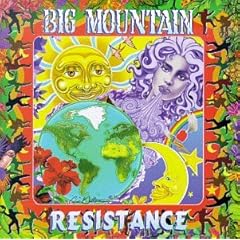 guess for that reason it could be called a success. As far as I can tell, there's not much to separate it from any of those Reggae Tribute to Paul Anka album. Listening to this song makes me feel like I'm in a shitty bar in inland Florida, watching some sunburned middle-aged fat guy in a sales rack Tommy Bahama shirt order up yet another Pina Colada with one hand while he gropes the frizzy haired 35-year-old divorcee in the bikini top and belly jewelry with the other hand. If that's not a ringing endorsement, I don't know what is.
 Download: Big Mountain - Baby, I Love Your Way
 What was it about '90s rock music that lent itself so easily to female-fronted rock groups? How many times did you turn on MTV to see a cute girl sporting a dress she probably stole from her grandma and a hair color not found in nature standing in front of a wall of Marshall stacks singing about how much guys suck? They certainly weren't invented in the '90s. Janis Joplin, Patti Smith and Debbie Harry had held their own as the only girl in serious rock bands decades earlier, and certainly the '80s had their share with Chrissy Hynde of The Pretenders leading the way.
 Letters to Cleo was formed by Hanley and guitarist Greg McKenna in Boston in 1988. McKenna had begun another band and drafted Hanley, then a member of a new wave group. When that band dissolved, McKenna and Hanley decided to continue their partnership with a new power-pop based project. With the addition of Mike Eisenstein on guitar, Stacy Jones on drums and Scott Riebling on bass, the project became Letters to Cleo, named for a box of letters from Hanley's childhood pen pal named, er, "Cleo".
The comfort of a knowledge and I'll rise above the skyI'm pretty sure we'll all stick with mumbling our way through that part when it comes on the
above I'll never parallel the challenge of an acquisition
In the here and now...here and now
 iPod, but thought it would be nice to see, right?
 A funny thing about pop music is that there's always room for the singer-songwriters. A movement begun in the '70s thanks to the popularity of Bob Dylan (who was really just doing his best Woody Guthrie), "singer-songwriter" became a genre in its own right and was made popular by artists wielding nothing more than a piano or acoustic guitar, their sweet voice, and some lyrics that, more likely than not, told a story about heartbreak. Think: Paul Simon, James Taylor, Jackson Browne, Carole King, Gordon Lightfoot, Don McLean, Carly Simon, Cat Stevens and a ton of other artists that you may have never heard of, but your parents love to play full-blast in their SUVs.
 Embarrassment.
 continue his venture monetarily, Johnston sold off a piece of the family farm--a painful decision, considering Johnston had inherited the farm from his grandfather (the incident is the subject of the album's lead track). The outcome was worth the risk as 1992's Can You Fly ended up on album of the year lists from Spin, Billboard, and The New York Times. Famed critic and Village Voice writer Robert Christgau gave it an A+ and called it "a perfect album." Critics compared his wry, character-based lyrics to the writings of Raymond Carver. Despte the lack of a single, DJs routinely played cuts from the album. Johnston's momentum was riding high, and he quickly signed to a major--Elektra Records, and drafted a mega-producer--Butch Vig (Nirvana's Nevermind, Smashing Pumpkins' Siamese Dream) --to man the boards for is follow up LP.
 songwriting prowess--both melodically and lyrically--and melancholy vocals. The song features Johnston's speaker admitting his past as an unreliable lover--"do you want me now?" he asks in the refrain. Translation: "yeah, I'm a pretty sketchy dude--you still interested?" The song is gorgeous, beginning with Johnston's vocals and acoustic guitar before giving way to a full scale ballad, complete with guitars so jangly, The Byrds may have asked him to ease off on the treble. When the song breaks back down to just Johnston and his voice again, he proclaims, "nobody's gonna tell me who to love," a line that's at once sad and proud--and a perfect example of Johnston's songwriting style.
 Johnston has also left behind his adopted city of New York for my hometown, Nashville, TN. He's currently recording a new album titled Rain on the City, slated to be released sometime in 2009.

 Posts
All Comments
Posts
All Comments


