
 Note: The "One Hit and That's It" will feature people who, for whatever reason, didn't have a second single--or not one to speak of--and seemed to virtually disappear from the music business. This is the first entry.
As a teenager, my friends and I wiled away our Saturdays at boarding school by taking the bus to the Hamilton Place Mall in Chattanooga, Tennessee. The suburban mall is a melting pot of every social group of teenage society: rednecks, skaters, goths, preps, sluts, indie kids, Anime/Dungeons & Dragons kids, stoners, hippies, etc. My friends and I watched from the food court, munching on warm pretzels and Chik-fil-A, wasting time until the next showing of Blade by fitting everyone who walked by into one of the above groups.
When the ultimate mall rat--the wigger--walked by, decked out in Tommy jeans and red FUBU shirt, his fitted hat turned to the side, tag still attached, with wispy hairs scattered across his upper lip and chin--a sad but earnest nod to a real goatee. We all groaned.
"Wiggers have got to be the worst ever," my friend said.
"Without a doubt," we all agreed. What could beat a wigger?
"Hippies," another friend said. I didn't agree. I had friends who could be considered hippies, they weren't bad, though I knew deep down that hippies at their worst could easily rival even Snow himself.
"Hippies," another friend said. I didn't agree. I had friends who could be considered hippies, they weren't bad, though I knew deep down that hippies at their worst could easily rival even Snow himself.
 As if to silence our conversation, walking past the Great Wraps gyro place at that moment was a young man with light brown, shoulder length dreads tucked into a beanie, his skinny frame covered in an XXL tie-dye shirt with the sepia-toned visage of Bob Marley printed on the front, shorts so long they almost touched his Birkenstocks, and a kinky chin beard that reached his chest. He carried a bag from Camelot Music, no doubt stuffed with drug paraphernalia and black light posters.
He was a White Rastafarian. The worst of wiggers mixed with the worst of hippies to create the ultimate cultural insult.
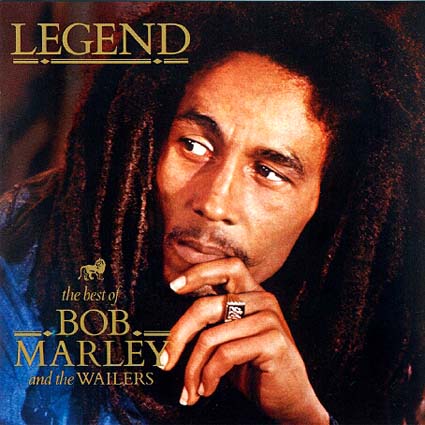
And what goes with White Rastafarians? Reggae music. The problem is, the White Rastafrian's knowledge of reggae extends no further than Bob Marley's greatest hits album Legend.
By 1994, the white guy dreadlocks had made their way into mainstream rock music through Adam Duritz of Counting Crows, but, mercifully, the white guy reggae was still held at bay--until our hero came on the scene with the Dumb & Dumber soundtrack.
The Dumb & Dumber soundtrack is like a time capsule of flash in the pan bands from 1994-95--The Proclaimers, Green Jelly, Pete Droge, Deee-Lite, Butthole Surfers, Deadeye Dick, and, as previously covered, the Crash Test Dummies all appear, some playing hits, some playing covers or b-sides. Quite an amazing collection for anyone who was incredibly impressed with that year's modern rock output.
Then there's our hero, Willi One Blood's (aka William Harbour, Jr.) "Whiney Whiney (What Really Drives Me Crazy)". Mr. One Blood is an artist who came out of nowhere, as if his sole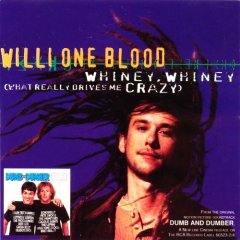 purpose was to have this song appear on this soundtrack and later disappear into a cloud of ganja smoke and incense. The song starts out with the sound of a door closing, some cowboy sounding guy saying "hold it stranger!" and then a cartoon sound effect leads us into Willie making proclamations about a "New dance! It's an old dance come back again!" over a vaguely Middle Eastern Indian melody, he then gives us a cliched "Lord-a-mercy!"--leading one to think he might actually be Dave Chappelle's Rasta character from Half-Baked-- before the song's beat breaks in with a saxophone goofily doubling One Blood's vocal melody. The song then begins to borrow heavily from '60s music, filling up several measures with at least two classics--"The Locomotion" and The Kinks "You Really Got Me," but screwing both up with unnecessary Willieisms. The song even credits Henry Mancini as a songwriter, although I'm admittedly not knowledgeable enough to know which parts are him ripping off that great composer.
Mr. One-Blood might defend his choice of using other songs as sampling, but really, it sounds closer to a reggae version of one of "Weird Al"'s famous polka medleys in which he runs together ten or so popular songs, all played as traditional polka. That's actually the best comparison I can come up with for Mr. One Blood. He's like a reggae White Rasta version of "Weird Al"--and yes, that's as good as it sounds.
But here's the problem--I don't think he's joking. Sure, he means for the song to be fun, but not quite for it to be the joke that it came out sounding like. The song's lyrics (and video) really seem to be calling for people to start doing this new "Whiney Whiney" dance that he's proposing. He desperately wants this thing to catch on, although, strangely, he never gives instructions, except for explaning that a) It's a new dance, and b) it really drives him crazy.
Here, in all its glory, is the video featuring Mr. One Blood, many stereotypical looking Indian people, some scantily clad women doing what I assume is the "Whiney Whiney" dance, and some random clips from Dumb & Dumber (by far the best part):
The song went to #34 on the Top 40 charts, #62 on the Top 100 and #34 on the "Rhythmic Top 40" which is something new to me, but which apparently leans towards rhythmic (key word) R&B, hip-hop and dance based music. The Dumb & Dumber soundtrack peaked at #62.
But that's not quite the end of Willi One Blood--first he appeared as "1st Stansfield Man" in Leon aka The Professional opposite Gary Oldman, Jean Reno and Natalie Portman. Um...I think you'll be able to pick him out.
Caution: ultra violence in this clip
"The fuck you know about music?" -- Willi One Blood, The Professional.
And did you see the way he shot that gun at that little kid? That deserves at least an Independent Spirit Award. One Blood continued his acting career in the box-office smash that turned Jerry O'Connell into a mega-star, MTV Films' Joe's Apartment.
Also, somewhat surprisingly, he did release a second single in 1996 called "It's True," but I'll be damned if I could find any evidence that it actually existed beyond an entry on AllMusic.com. That's right, no second single this week, I have failed you, dear readers! Regardless, the song--if it was even released (and I do have my doubts)--failed to do anything and saw Willie drop off the planet for a good, oh, 14 years.
What was One Blood doing all those years? Did he take the cash from his one hit, skip down to Kingston and blow it all on weed and Wailers bootlegs? Probably. Did he travel to different countries, with nothing but a turntable and microphone (perhaps two turntables?) singing his one song, and trying in earnest to teach his "Whiney Whiney" dance to hundreds of people in war torn, third world countries? Man, I hope so.
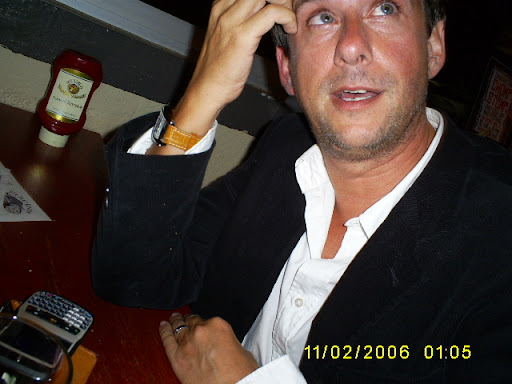 However, the picture to the left suggests a Hook-like scenario wherein Willi got amnesia, forgot he was ever a white rasta/hip-hop/reggae singer, and instead married, had children, settled down in Coral Gables and became an accountant or PR rep. Whatever he's been doing, Captain Hook must have captured his kids 'cause he's back in action, crowing his ass off and reggae-rapping like nobody's business.
Like all other has-beens or never-weres, One Blood has a MySpace page that reveals him to be, among other things, 104 years old, female, currently residing in Miami and a self-described "true original." It would also seem from the pictures that he's decided to spit in the face of all women by going and cutting off his lovely dreads--so as to just look like a normal white guy singing reggae.
The songs range from the sub-Sean Paul to sub-Wyclef Jean. Try not to roll your eyes at the sample heavy awfulness of "Best of One Blood" or "Life is Like a Road" (paging Tom Cochrane), both of which sound like they were made using Windows 98 versions of Audacity and Acid Music. Maybe this just isn't my type of music, but the vocals sound more like a parody of reggae than respectful. According to the page, these songs all come from the aforementioned forthcoming album, Blazing, a title which I can only assume is a social commentary on the devastating forest fires California has experienced over the past few ye--what? Oh. He's talking about weed again, isn't he? Damn these White Rastafarians!
I will leave you with a question for today, followed by a quote from Mr. One Blood:
Dumb & Dumber's soundtrack CD was only the second CD I ever owned. I'd also count reggae as one of the two or three genres of music I've never managed to get into. Coincidence? Is Willi One Blood to blame for my reticence to experience Lee "Scratch" Perry or Burning Spear?
"One thing I've learned in my travels is that people have more in common than they want to admit. So we might as well learn to live together. One world, one love, one blood."
--W. One Blood, MySpace page
Download: Willi One Blood - Whiney Whiney (What Really Drives Me Crazy)
And what goes with White Rastafarians? Reggae music. The problem is, the White Rastafrian's knowledge of reggae extends no further than Bob Marley's greatest hits album Legend.
By 1994, the white guy dreadlocks had made their way into mainstream rock music through Adam Duritz of Counting Crows, but, mercifully, the white guy reggae was still held at bay--until our hero came on the scene with the Dumb & Dumber soundtrack.
The Dumb & Dumber soundtrack is like a time capsule of flash in the pan bands from 1994-95--The Proclaimers, Green Jelly, Pete Droge, Deee-Lite, Butthole Surfers, Deadeye Dick, and, as previously covered, the Crash Test Dummies all appear, some playing hits, some playing covers or b-sides. Quite an amazing collection for anyone who was incredibly impressed with that year's modern rock output.
Then there's our hero, Willi One Blood's (aka William Harbour, Jr.) "Whiney Whiney (What Really Drives Me Crazy)". Mr. One Blood is an artist who came out of nowhere, as if his sole
Mr. One-Blood might defend his choice of using other songs as sampling, but really, it sounds closer to a reggae version of one of "Weird Al"'s famous polka medleys in which he runs together ten or so popular songs, all played as traditional polka. That's actually the best comparison I can come up with for Mr. One Blood. He's like a reggae White Rasta version of "Weird Al"--and yes, that's as good as it sounds.
But here's the problem--I don't think he's joking. Sure, he means for the song to be fun, but not quite for it to be the joke that it came out sounding like. The song's lyrics (and video) really seem to be calling for people to start doing this new "Whiney Whiney" dance that he's proposing. He desperately wants this thing to catch on, although, strangely, he never gives instructions, except for explaning that a) It's a new dance, and b) it really drives him crazy.
Here, in all its glory, is the video featuring Mr. One Blood, many stereotypical looking Indian people, some scantily clad women doing what I assume is the "Whiney Whiney" dance, and some random clips from Dumb & Dumber (by far the best part):
The song went to #34 on the Top 40 charts, #62 on the Top 100 and #34 on the "Rhythmic Top 40" which is something new to me, but which apparently leans towards rhythmic (key word) R&B, hip-hop and dance based music. The Dumb & Dumber soundtrack peaked at #62.
But that's not quite the end of Willi One Blood--first he appeared as "1st Stansfield Man" in Leon aka The Professional opposite Gary Oldman, Jean Reno and Natalie Portman. Um...I think you'll be able to pick him out.
Caution: ultra violence in this clip
"The fuck you know about music?" -- Willi One Blood, The Professional.
And did you see the way he shot that gun at that little kid? That deserves at least an Independent Spirit Award. One Blood continued his acting career in the box-office smash that turned Jerry O'Connell into a mega-star, MTV Films' Joe's Apartment.
Also, somewhat surprisingly, he did release a second single in 1996 called "It's True," but I'll be
damned if I could find any evidence that it actually existed beyond an entry on AllMusic.com. That's right, no second single this week, I have failed you, dear readers! Regardless, the song--if it was even released (and I do have my doubts)--failed to do anything and saw Willie drop off the planet for a good, oh, 14 years.What was One Blood doing all those years? Did he take the cash from his one hit, skip down to Kingston and blow it all on weed and Wailers bootlegs? Probably. Did he travel to different countries, with nothing but a turntable and microphone (perhaps two turntables?) singing his one song, and trying in earnest to teach his "Whiney Whiney" dance to hundreds of people in war torn, third world countries? Man, I hope so.
However, the picture to the left suggests a Hook-like scenario wherein Willi got amnesia, forgot he was ever a white rasta/hip-hop/reggae singer, and instead married, had children, settled down in Coral Gables and became an accountant or PR rep. Whatever he's been doing, Captain Hook must have captured his kids 'cause he's back in action, crowing his ass off and reggae-rapping like nobody's business.Like all other has-beens or never-weres, One Blood has a MySpace page that reveals him to be, among other things, 104 years old, female, currently residing in Miami and a self-described "true original." It would also seem from the pictures that he's decided to spit in the face of all women by going and cutting off his lovely dreads--so as to just look like a normal white guy singing reggae.
The songs range from the sub-Sean Paul to sub-Wyclef Jean. Try not to roll your eyes at the sample heavy awfulness of "Best of One Blood" or "Life is Like a Road" (paging Tom Cochrane), both of which sound like they were made using Windows 98 versions of Audacity and Acid Music. Maybe this just isn't my type of music, but the vocals sound more like a parody of reggae than respectful. According to the page, these songs all come from the aforementioned forthcoming album, Blazing, a title which I can only assume is a social commentary on the devastating forest fires California has experienced over the past few ye--what? Oh. He's talking about weed again, isn't he? Damn these White Rastafarians!
I will leave you with a question for today, followed by a quote from Mr. One Blood:
Dumb & Dumber's soundtrack CD was only the second CD I ever owned. I'd also count reggae as one of the two or three genres of music I've never managed to get into. Coincidence? Is Willi One Blood to blame for my reticence to experience Lee "Scratch" Perry or Burning Spear?
"One thing I've learned in my travels is that people have more in common than they want to admit. So we might as well learn to live together. One world, one love, one blood."
--W. One Blood, MySpace page
Download: Willi One Blood - Whiney Whiney (What Really Drives Me Crazy)




 Posts
Posts

